copenhagen 6.20-6.26
1. First Impressions
Upon landing at the Copenhagen airport, two fellow program members and I made our way through customs and headed towards the train station. I downloaded the DSB transit app, and while waiting for the train we discussed the surprisingly clean train station which was indeed connected to the airport. No shuttle, no rideshare, no bus— just a train right where we needed it to be. The floor of the station was being cleaned by a maintenance worker right in front of us— something I have perhaps never experienced while in the New York Subway or San Francisco BART. Within 30 minutes of being in Copenhagen, I was already astounded by what surrounded me and buzzing with excitement about what was yet to come.
The joy of a clean, quiet, and affordable train from the airport was just a sneak peak, I would soon realize. Once we all arrived at the hostel, we soon set off on our first mini adventure. Nola, Alex, Mallory, and I biked north, first stopping by the University of Copenhagen Botanical Garden. We walked through the rose garden and park, admiring the summertime blooms and spotting some unique birds. The birds here have been a particularly interesting thing for me here— more on this to come. The lawn was filled with twenty-somethings gathered together over wine and cheese, laughing and chatting in the warm afternoon light.
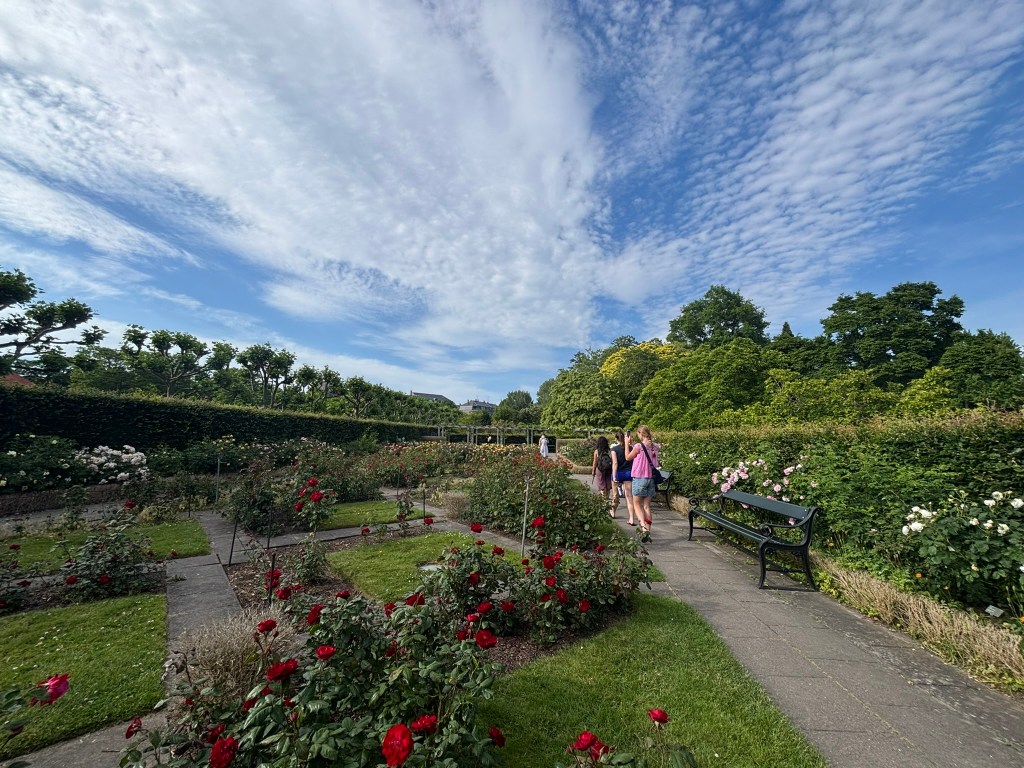
After sufficient time basking in this lovely scene, we continued on toward Nørrebroparken, and stopped by the Friheden outdoor bar for a beer and watched tricks on the halfpipe stationed amidst the metal tables and chairs. As it neared 6:30, we crossed the street into the park proper to meet up with the group. We gave hacky sack a go, (mandatory because Alex is the Hacky Sack Club President) and I actually was pretty good this time around. I fell comically hard on the grass, but I think my sudden increase in skill was due to the overall mood-boost this city had given me in a mere 8 hours. Electronic music was pounding in the distance, cut by Eurasian magpies chirping in the trees and countless bikes’ freewheels whirring past us.
After departing from the larger group in Nørrebroparken, the girls and I continued on biking through the city. Heading further north, the sound of music in the distance grew closer and we headed straight towards it. Within a few minutes, looking down from Tagensvej, we saw a crowd forming around a makeshift DJ set bumping in the park below. We set our bikes on a rack and joined the scene— smoke was billowing from a machine, vodka-redbulls were being poured at a table to the side, and dozens of Copenhageners moved to the music. We danced alongside them for a while before moving to the grassy hill speckled with groups of friends. So much stood out to me at this event, specifically that calling it an event feels too formal— it was more a gathering of people who seemed simply free to be themselves.
Along the walkway, the number of bikes parked matched the number of people. Dancers were clad in leather and lace, some covered head to toe in bold tattoos. A man swapped his skirt for light wash denim shorts, revealing a bright orange thong during his outfit change, another person changed out of a black lace bodysuit into jeans and a green t-shirt. Everyone respected each other’s space, and when I saw people touch it was either a warm embrace or a tickle to say “hi” between friends. No shoving, no glaring, no metal detectors— all things pretty much unheard of at any live music event back home. It was a diverse gathering of people, all coexisting and sharing this beautiful early summer night. There is no memory I have from my 20 years growing up in the States that mirrored this moment that felt oh-so human. We stayed on the hill and watched this all unfold until we decided on getting a drink and heading back towards the hostel. I couldn’t help but get a bit teary-eyed thinking about both the day I had experienced and everything that was yet to come.
2. Joys of Adaptability
On Tuesday, we met with Senior Project Manager James Thoem of the Gehl urban design and strategy firm. We ascended a switchback staircase until arriving in the sleek, very Danish office that the company’s Copenhagen team works from. James presented an overview of the firm’s mission and work, which first and foremost focuses on how cities can be designed for people. It sounds like an obvious goal; however, living in cities and spending time studying them has really shown me that this is often not so much the case.
While biking along the waterfront, James explained that an older factory warehouse exploded several decades ago, prompting sharp changes in Copenhagen’s land use strategy. The building was on the waterfront and close to the city center, highlighting the threat that a repeat event would cause to the city’s residents. This event was one catalyst in moving manufacturing and production further out of the city, as leaders recognized a need to move forward and modernize with people in mind. This stood out to me specifically on the tour because there is a clear distinction in this choice to prioritize people’s wellbeing over the economy— something seldom seen in the US. Copenhagen wasn’t choosing to give up on production; the city instead recognized a need for change. This adaptability is a key theme I have noticed this week while learning about this city and Denmark as a whole.
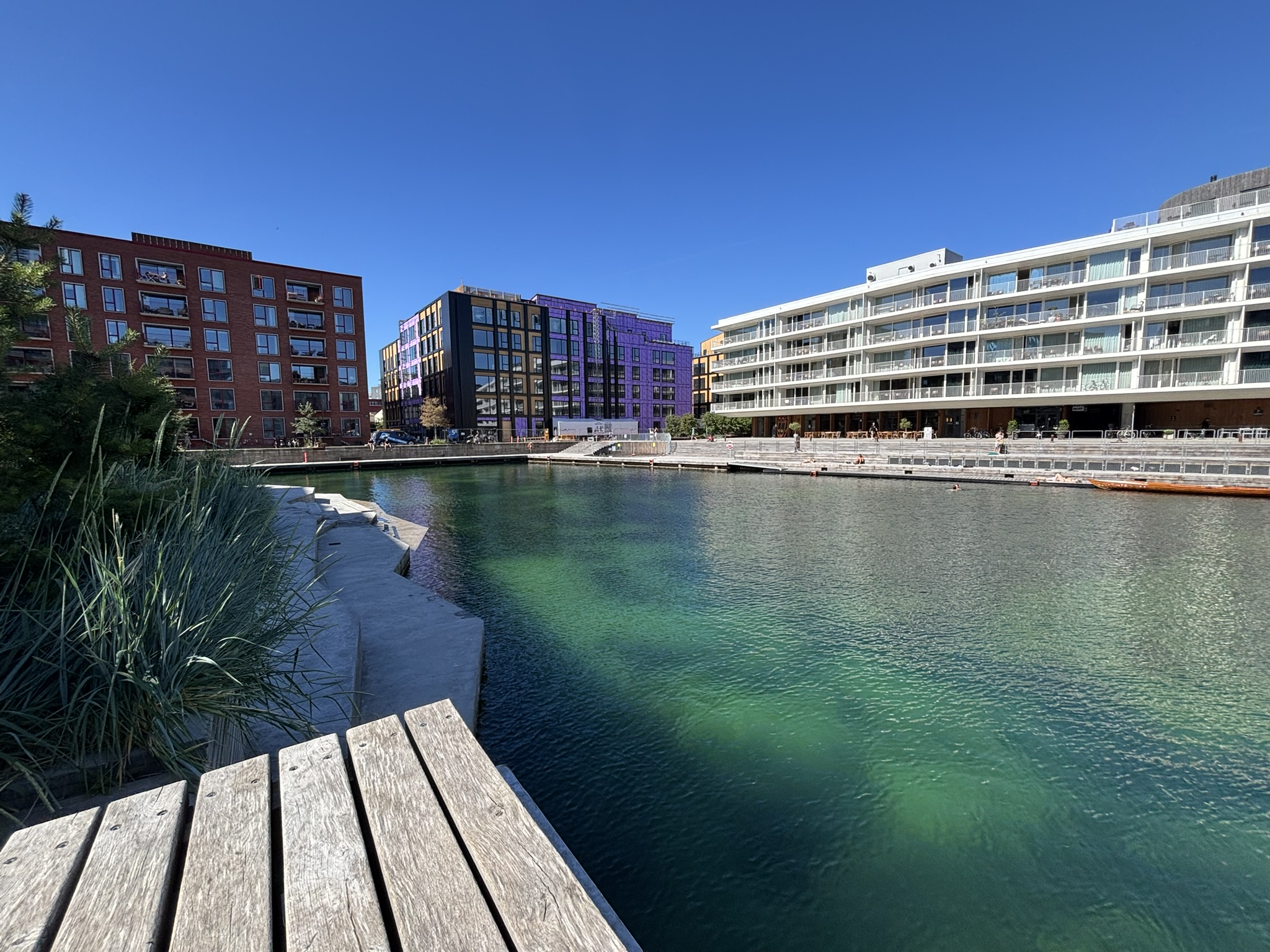
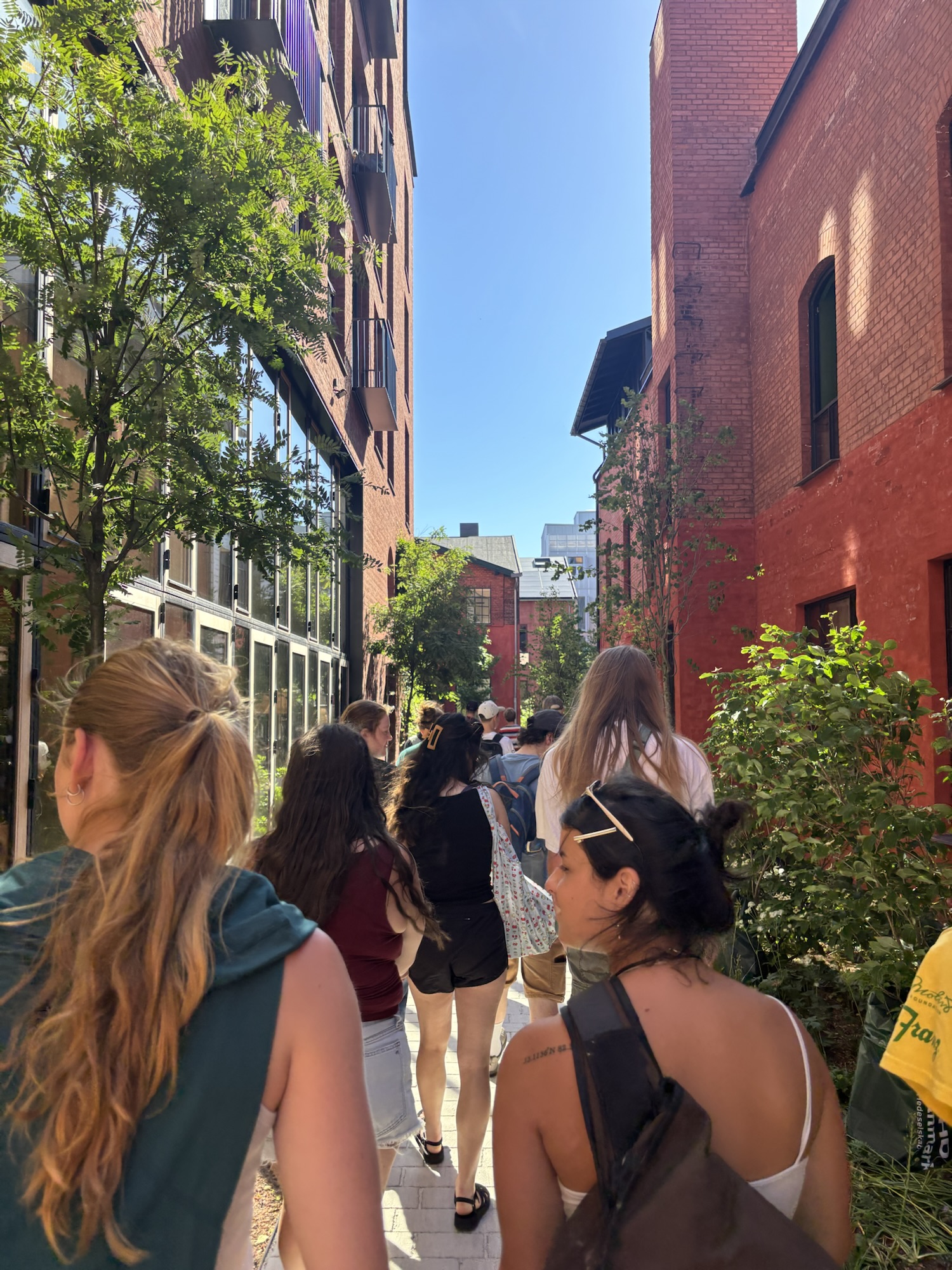
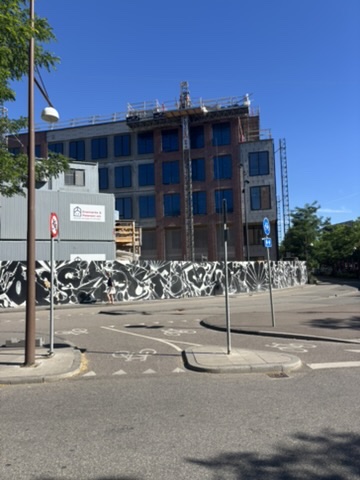
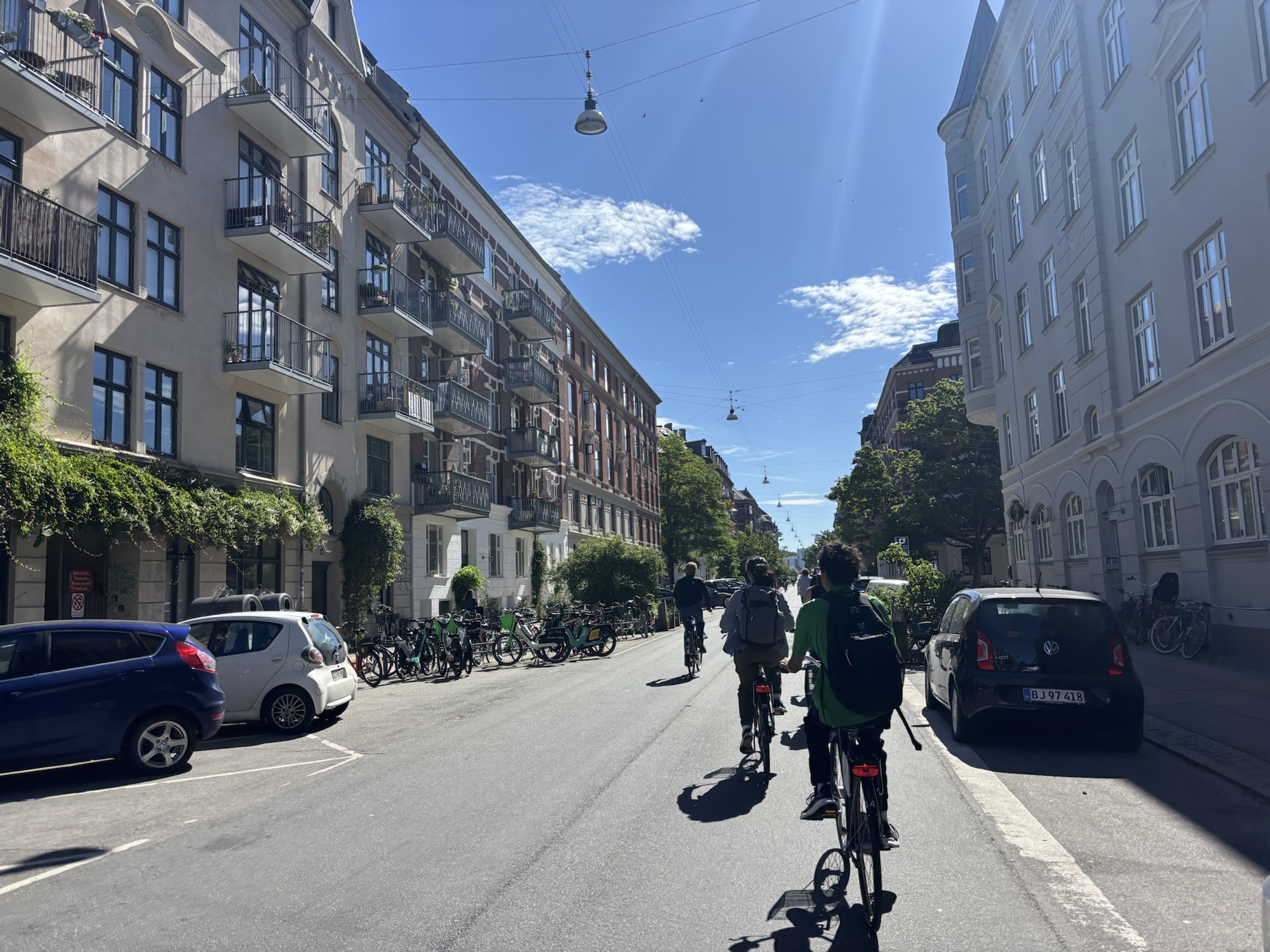
When touring the Red City, we looked out across the area from a rooftop terrace and could see the beginnings of a new infill project. The city recognized a future need for more housing and took action to increase the housing supply. This would be an example of more anticipatory planning in contrast to the reactionary development on Copenhagen’s waterfront. Ideally, planning is anticipatory, but these examples show that both options can have desirable outcomes.
The balance of adaptability and openness to change stood out to me strongly in Copenhagen. When a problem was identified, solutions were proposed, and change occurred. I still feel like I have barely scratched the surface in learning about the city, but this pattern highlighted such a stark contrast between Denmark’s initiative for change-making and America’s propensity to dig its heels in when change is proposed.
3. Bikes in Copenhagen
On our bike tour with James in Copenhagen, he brought up how in US cities, biking is a subculture, whereas in Copenhagen, biking simply is the culture. For the rest of our ride, I sat with this idea and turned it over in my mind. Something that when said aloud seemed so simple and yet I hadn’t thought about it that way before— perhaps because I have only experienced cycling as a subculture. This trip is my first time in cities where cycling is truly the norm, and it sure feels good to be here.
Few bikes seen around the city are ‘fancy’; instead, most people ride standard Dutch-style bikes, which focus on function over form. It makes sense: if everyone in Copenhagen were constantly racing through the city on $10,000 bikes, it would be likened to everyone in San Francisco driving a Ferrari to after-school pickup. Words that come to mind include: absurd, flashy, and inefficient. The rusty, trusty (ish) Dutch bike in Scandinavia could be likened to a used sedan in the US— understated, subtle, and efficient. This isn’t to say that there are no fancy bikes in Denmark. Especially outside of Copenhagen, on the Cycling Super Highway to and from Hillerød, I saw many cyclists flying by on very high-end bikes.
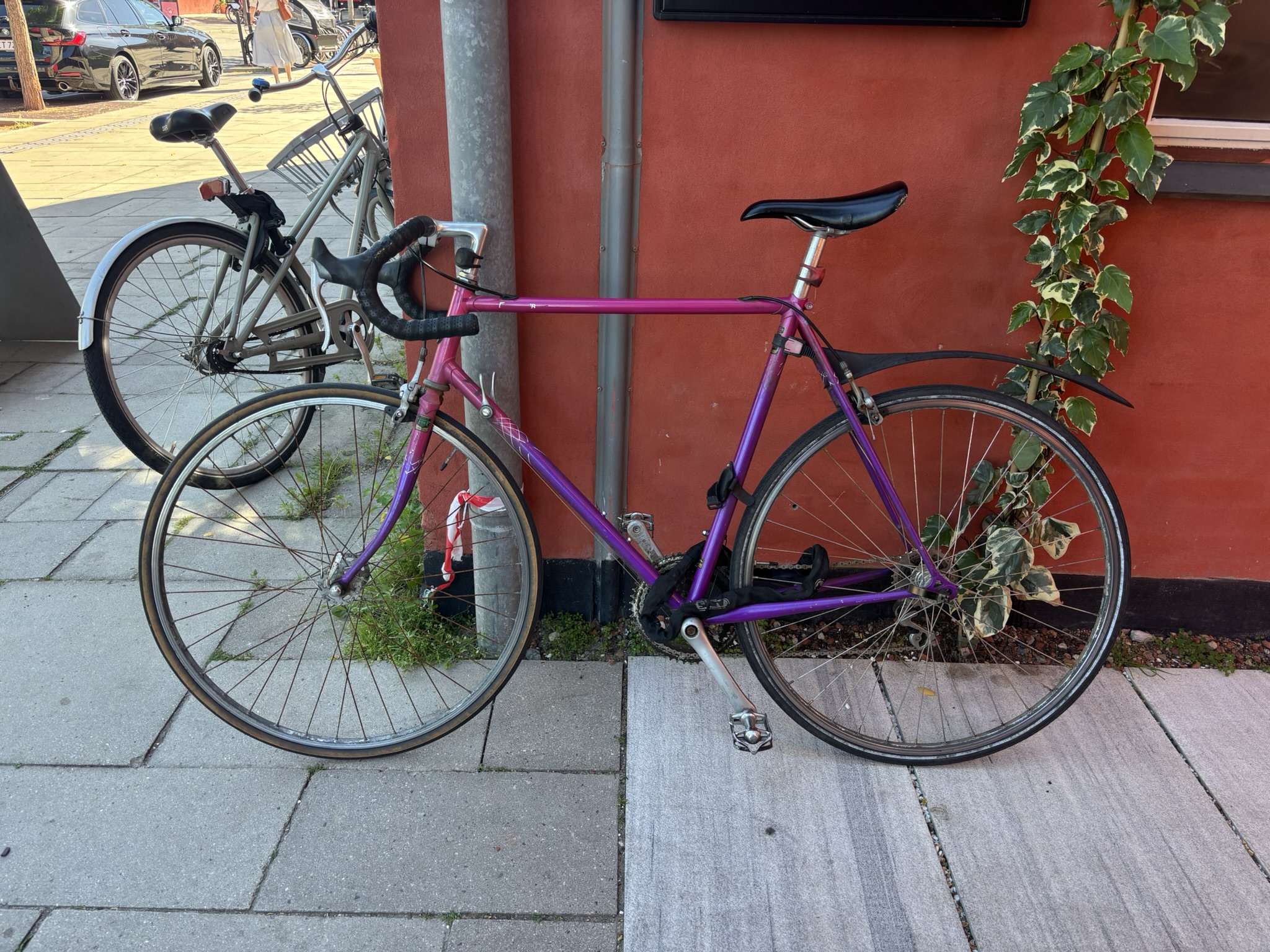
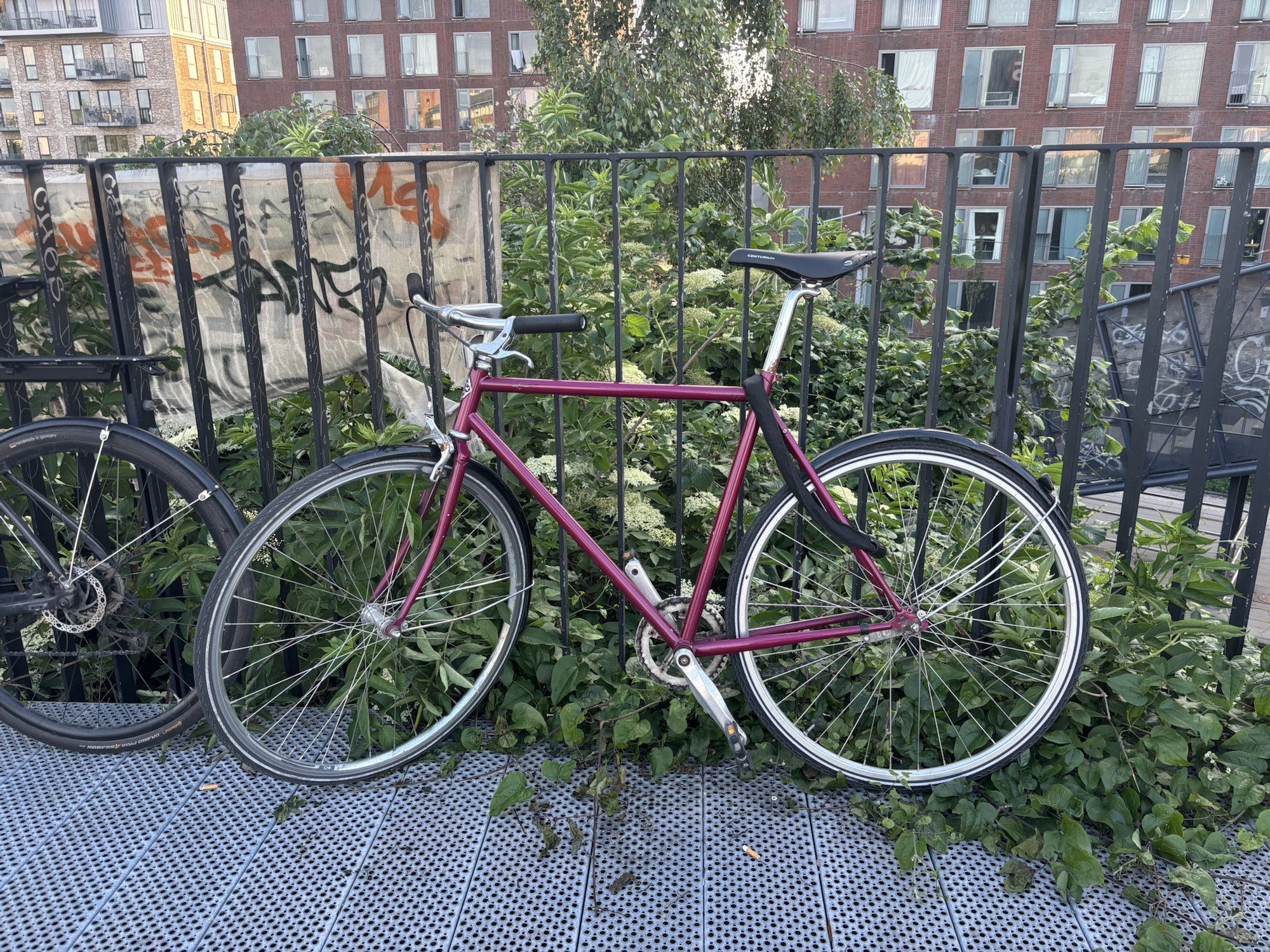
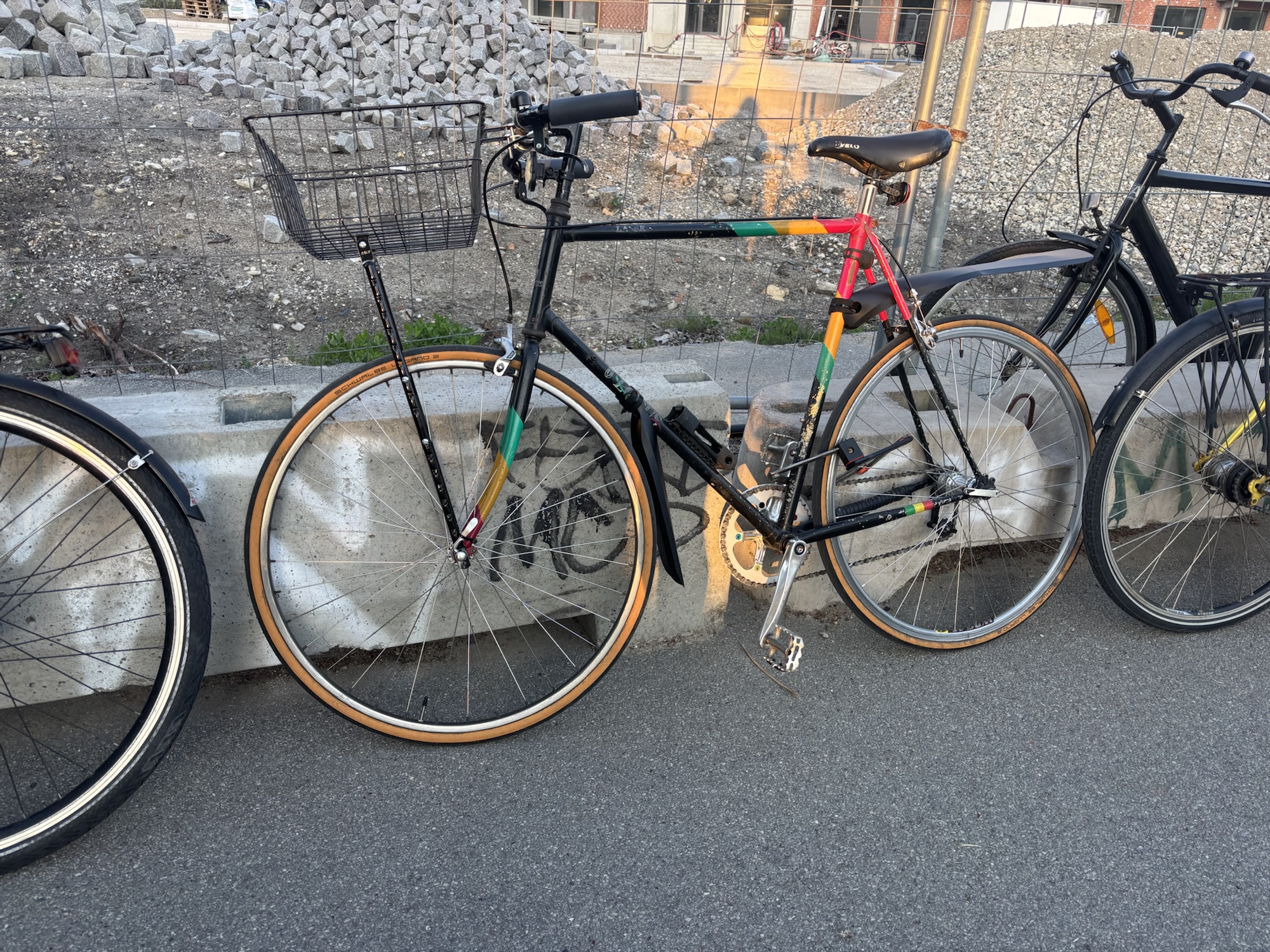
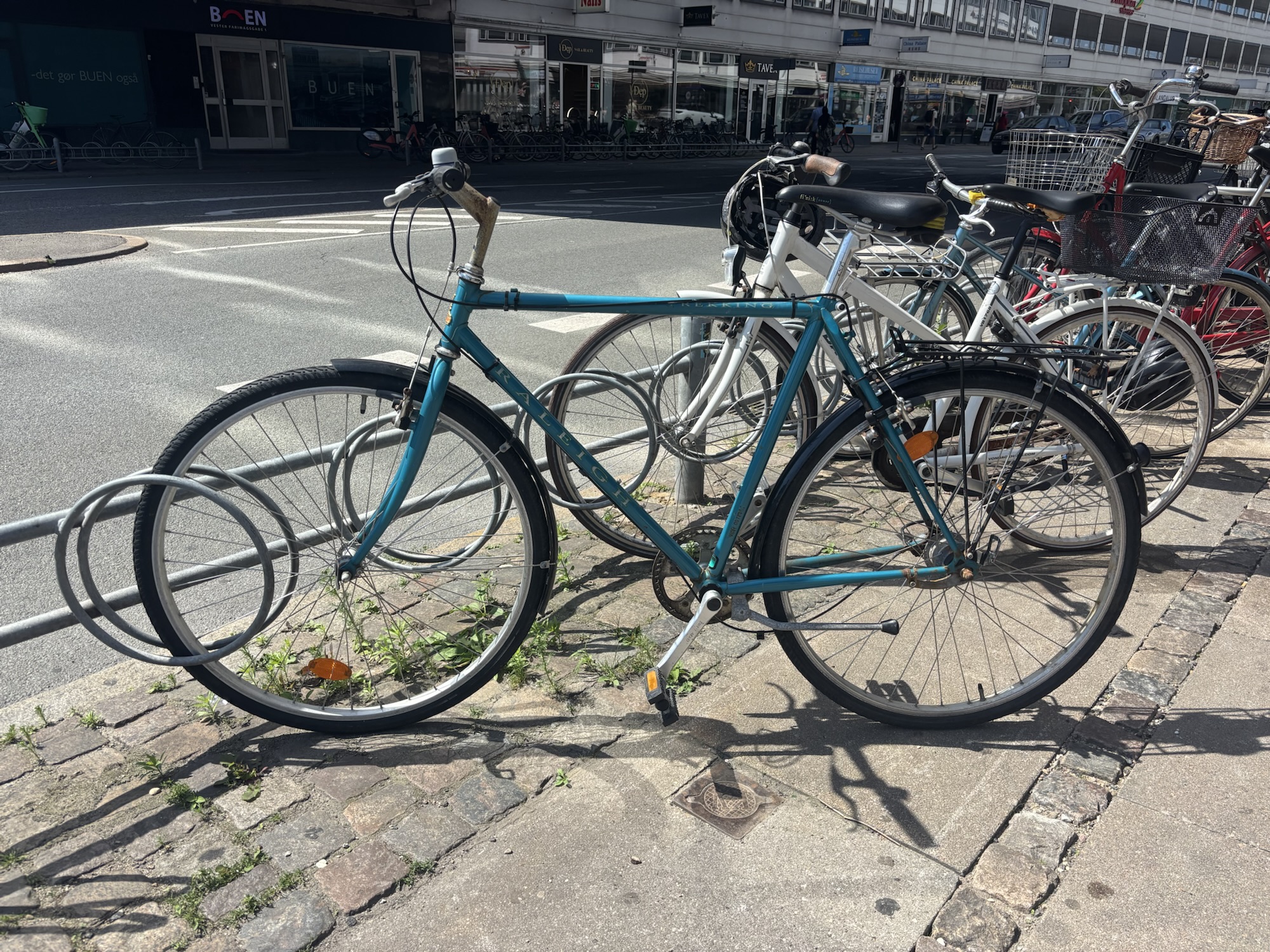
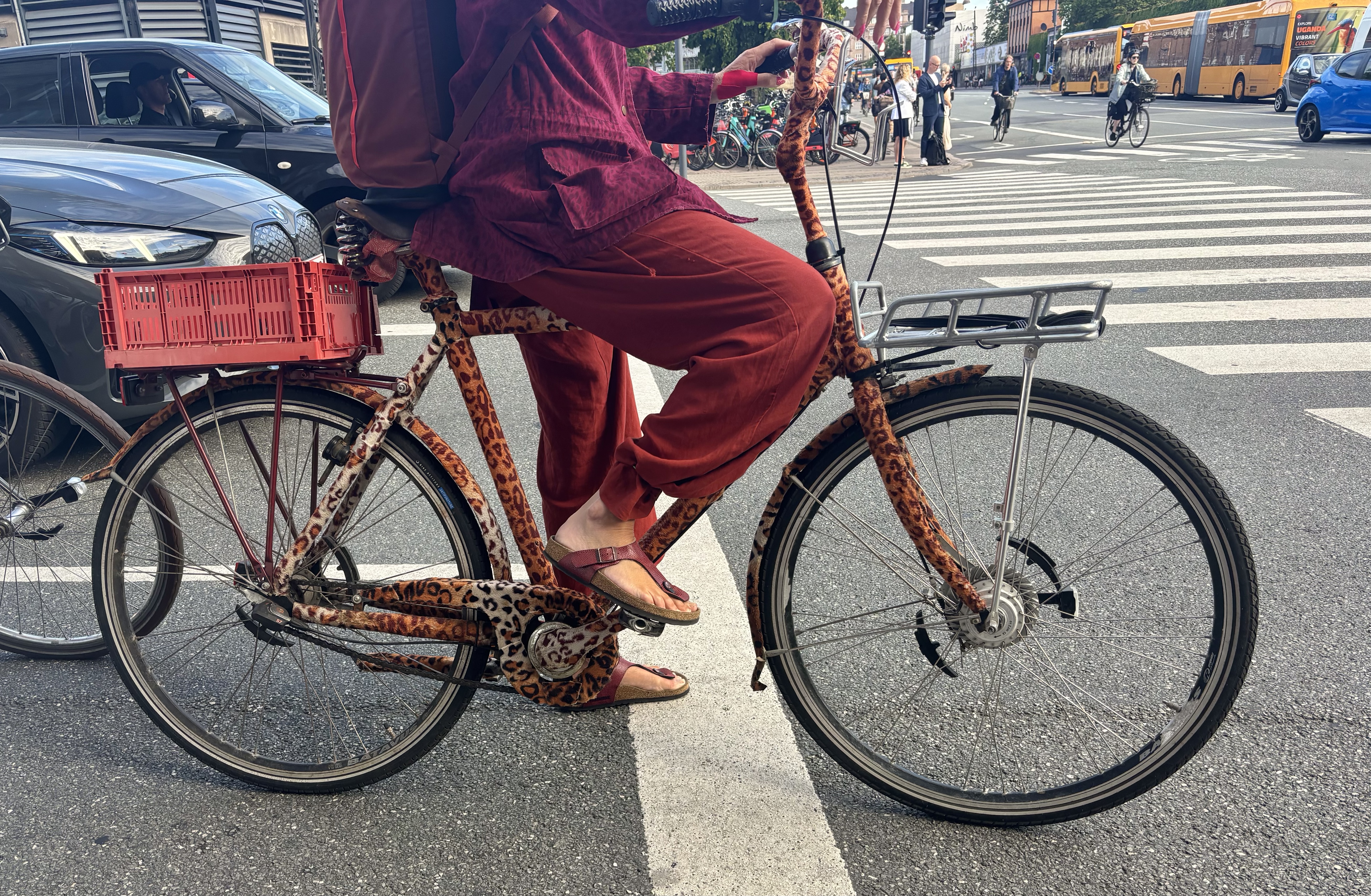
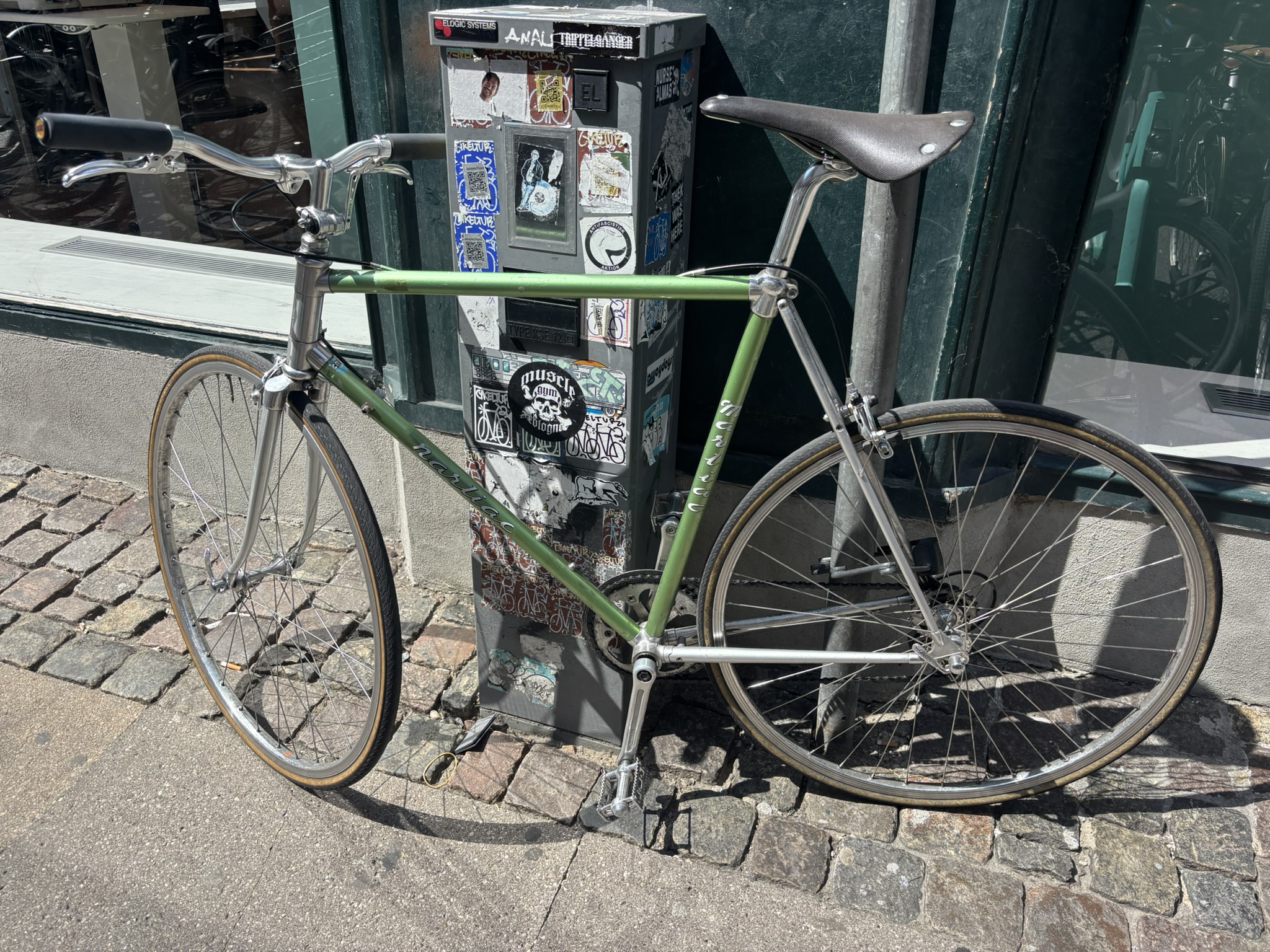
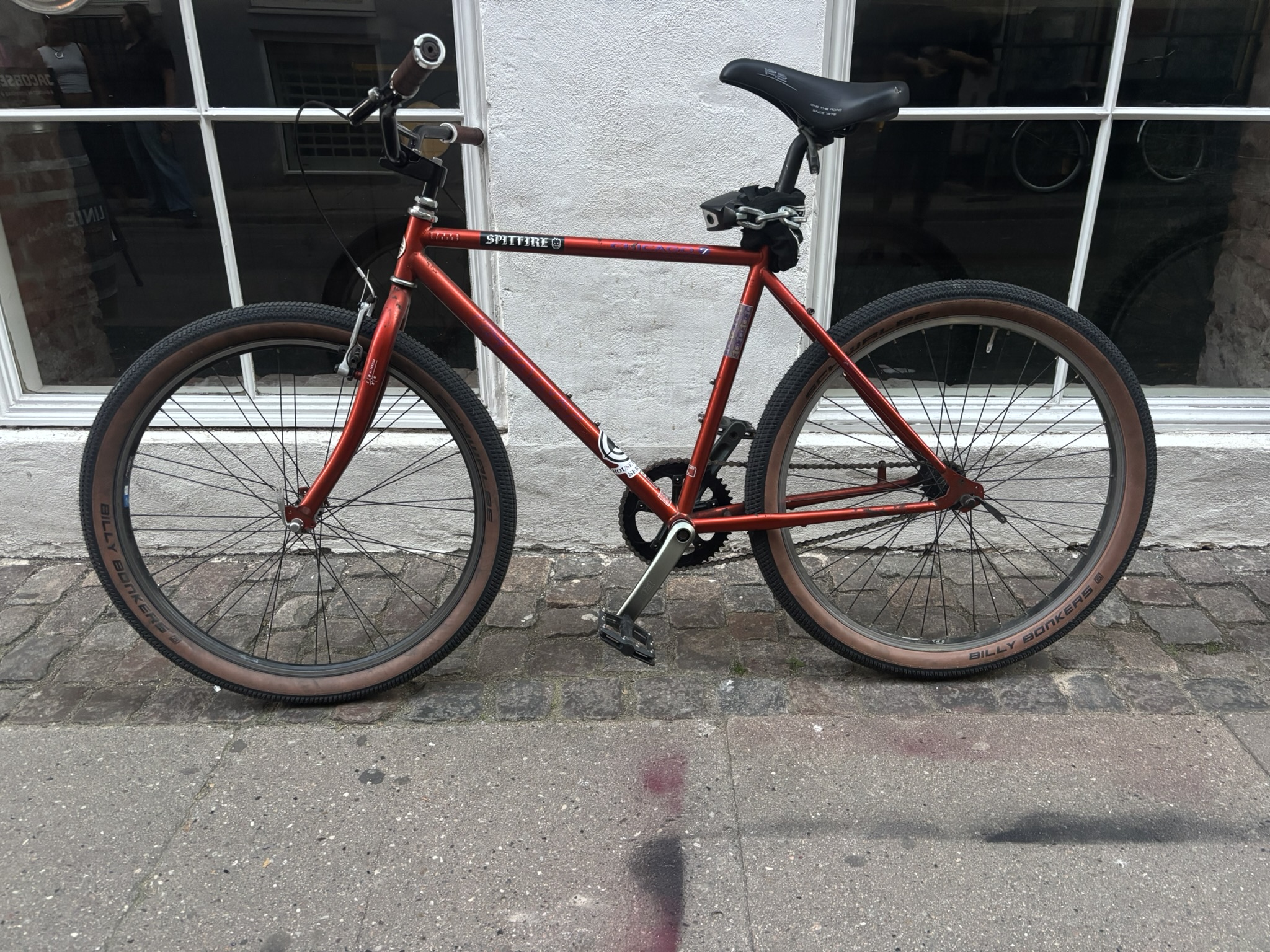
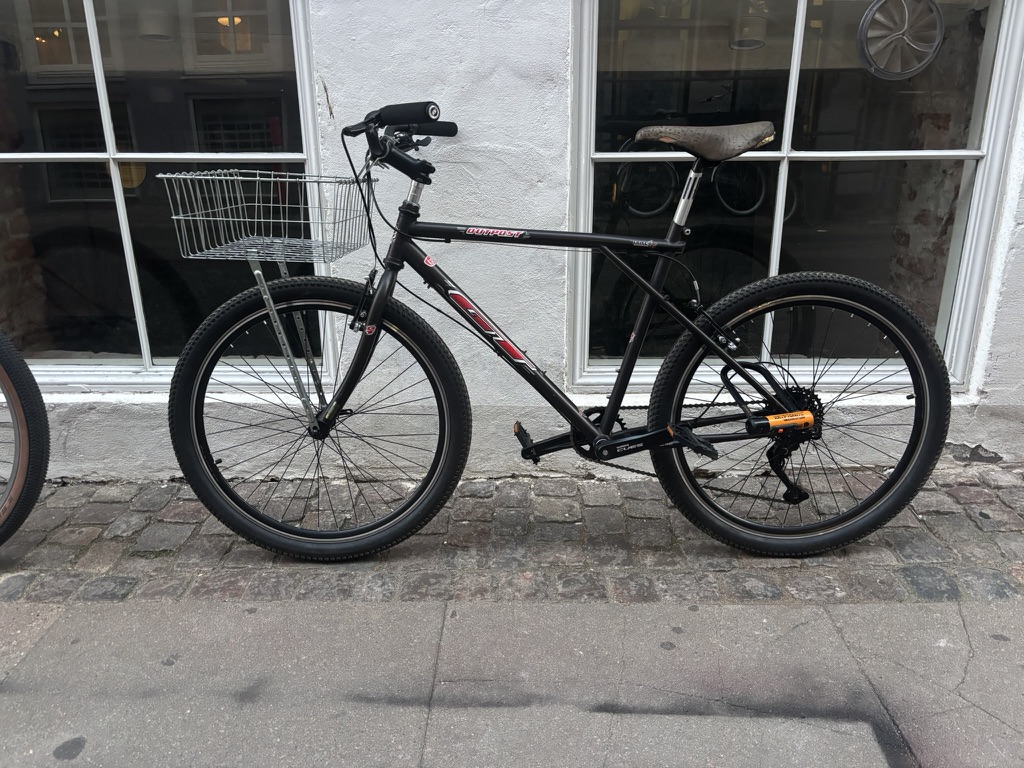
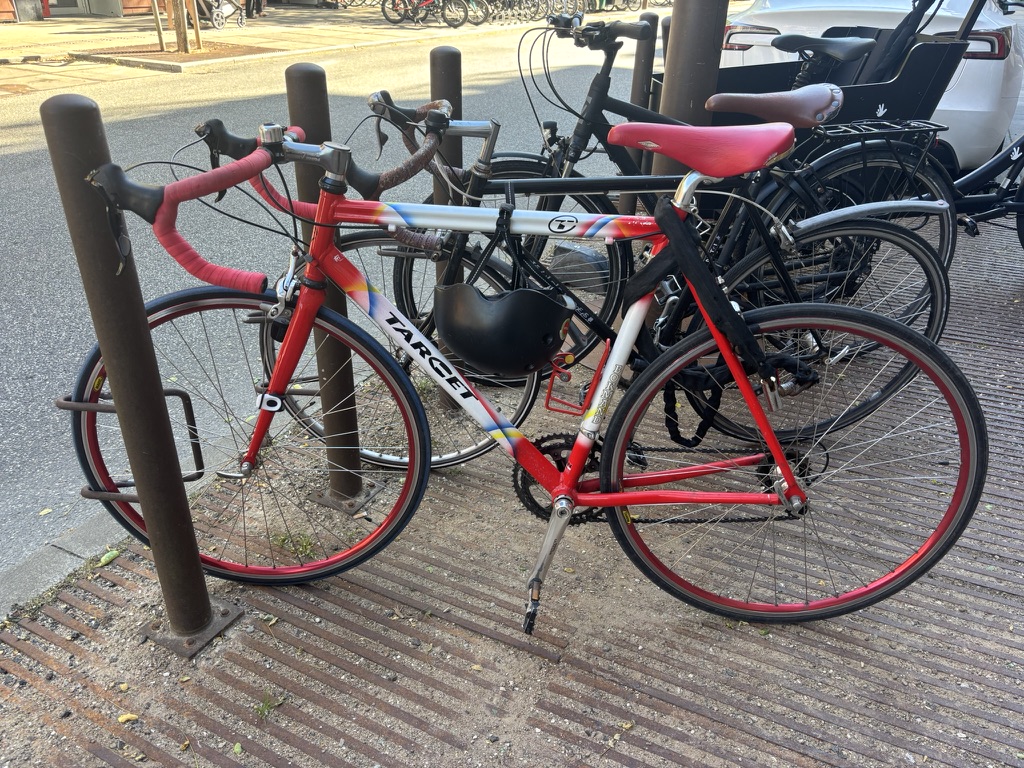
Because bikes are part of a subculture in the US, one’s bike is more of a personal statement. As I have spent more time in this subculture/community, I have slowly built up a mental catalogue of bike frames, parts, styles, etc. I have learned to clean and maintain my own bike, and am able to share what I know with my friends so we all can ride smoothly together. After this program, I have plans to build up a bike for myself to ride around in San Francisco this summer, and I’ve gotten myself into some deep internet rabbit holes about gear ratios, cassettes, and basket mounting– all things I knew nothing about 2 years ago. While it is easy to get a little too caught up in the details, and begin sounding like a hipster bike dude, I have developed a keen eye for sexy bikes. I thought it was fitting to share some of my favorite bikes I saw in Copenhagen.

malmö 6.26-6.29
4. Social Trust and Application at Home
It has been a few days since leaving Copenhagen for Malmö, and I must admit that I miss it. Malmö has its charms, including some incredible falafel, but the magic of Copenhagen’s transit infrastructure and sun-warmed wooden docks is hard to top. Despite my preference, I found a clear overlap in social trust and capital across both cities. These factors are inspiring and appealing aspects of living in Scandinavia for me, and each instance that reminded me of the strong social trust felt like a shock.
After our class tour of Nordhavn in Copenhagen, while walking back to the subway station, I saw something that really struck me. As we passed a gym, I noticed a baby in a stroller just parked right outside the doors unattended. In Denmark, this is a traditional and common practice even in a metropolitan capital like Copenhagen. The Danes strongly believe in the benefits to a baby’s immune system from frequent exposure to fresh air. This is coupled with the country’s low crime rate overall, leading to a sense of safety and security. In the US, leaving a sleeping baby outside would be frowned upon or even reported, and truthfully, wouldn’t be as safe. Our country’s priority of independence over community feels glaring now that I have had to experience the alternative.
In Malmö, I thrifted a pair of vintage leather kitten heels that I am oh-so-excited to wear out in Amsterdam, but they needed a slight repair. I went to the mall at Triangeln to visit the cobbler (which feels like a funny mall activity), and turned in my shoes for service. With an expedient turnaround of 30 minutes, I planned to sit in the plaza outside to pass the time. On my way outside, I first headed towards the public restroom, and was admittedly a bit surprised to find myself standing in front of a fare to gate to enter. The mall bathrooms are attended by a cleaner and require a tap-to-pay payment of 10kr ($1 USD). My American mind was hesitant and a little annoyed at first, but soon realized how much this makes sense. I think I have grown so used to a dirty public restroom that a clean one for a fee barely crossed my mind, but it worked in this mall like a well-oiled machine.
This social trust has its limits, and interestingly, fails to apply to an essential part of the cities we have visited— bikes. Bike theft is surprisingly common in Denmark, Sweden, and the Netherlands, especially for rented bikes like ours. Bikes outnumber residents in cities like Amsterdam and Copenhagen, but the theft doesn’t tend to be for the purpose of wanting a new bike. Instead, the majority of bike theft is through larger crime rings, which distribute stolen higher-end e-bikes and cargo bikes across the region. Though bike theft is also a problem back home, the bike locks we use are much more robust than those typically used over here…
I feel like I have seen a broad spectrum of social trust in these countries and found its limitations as well. The payment system for public restrooms seemed like a program I could see transferred to US cities. People would for sure be mad at first to have to… wait for it… pay for a helpful service, but I think the benefits would be seen quickly. Also, this has the potential to create jobs and lower health risks as our public shared restrooms would be cleaner and safer.
nijmegen 7.04-7.07
5. Transportation Progress in Nijmegen and the Netherlands
Before entering Nijmegen, Netherlands, I had no idea what to expect from this next city. Walking down the cobblestone streets towards the hostel, I could tell this place has a rich history in the process of mixing with a more modern Dutch lifestyle. Nijmegen is the oldest city in the Netherlands, with the country’s oldest established street— but it wasn’t founded by the Dutch, it was the Romans nearly 2,000 years ago.
I’m just starting to square the circle when it comes to the differences between transit infrastructure development and improvement in the US cities vs. European ones. Since Copenhagen, a theme I have noticed is a sense of urgency and action when it comes to planning. Every protected bike lane, new train station, or proposed housing development I learn about here simply makes so much sense. Though hard for me to always remember, these cities surpass any American city in age by hundreds of years. The European cities we have visited are not on their first round of mobility infrastructure; they are on their second, third, and fourth rounds. Unfortunately for us in the states, our earlier rounds of infrastructure like the street car have faded into the distant past with the advent of the automobile and major highway subsidies.
Despite this, meeting with transportation planner Sjors for a bike ride instilled quite a bit of hope. I don’t want to become jaded as I find many transportation planners to be, but I don’t blame them considering the level of pushback projects face for poor reasons. Sjors was quite the opposite, with a bright outlook on transportation futures and a long list of ways to be successful when working on planning projects. He emphasized tailoring your language to each specific audience— people in three car households are going to have a staunchly different perspective on removing on-street parking compared to an avid commuter cyclist living on the same street. Though Sjors is an avid cyclist himself, with 13 bikes between his three-person household (one member is his 15 month old daughter and she has three bikes though she is too young to ride any), he does not consider himself an activist for cycling or infrastructure— he is a planner, and he presents the facts about a project to gain support or shift opinions.
Hearing Sjors’ success stories on projects where he met resistance but was able to prove the benefits of proposed design changes to his audience were quite inspiring. I myself find it hard to stop myself from singing the praises of bike infrastructure when it may not be the right moment for it. I can still believe everything I do about the benefits of time on a bike and less time in a car, but some scenarios call for less pro-bike-bias and more listening. It was impactful and important to hear methods and positive outcomes of someone successfully making change in his community’s transportation network.
amsterdam 6.29-7.04
6. The Price of Convenience is… Inconvenience!
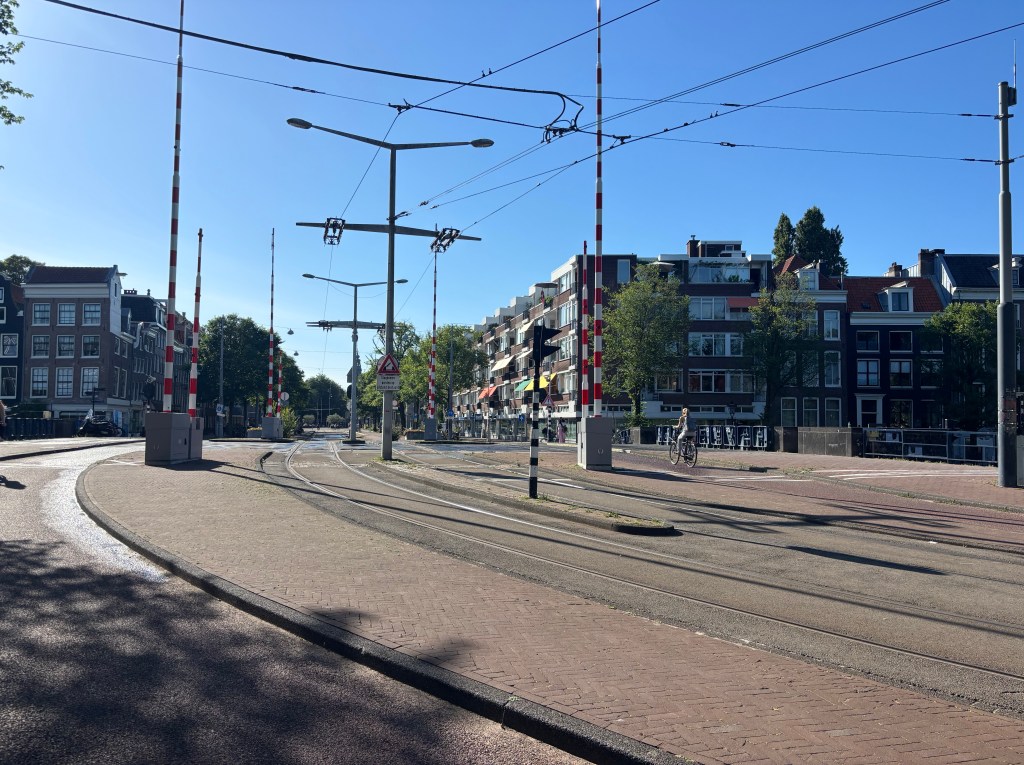
Amsterdam, at least during my visit, has been a liiiiittle bit of a mess. But not in a bad way, just in a way I had to adjust to after the neat and orderly ways of Copenhagen. Though the way people move through the city itself here is different, I’m more focused on how much construction is going on everywhere. While walking and biking and taking the tram around town, practically every street is half torn up. But I soon realized that this constant construction is exactly why I’m even able to walk and bike and take public transit here.
As with all of the cities we have visited, Amsterdam hasn’t always been so multimodal or bikable. In order to make the transition after the 1960s and 70s car-centric era, the city has needed to essentially remodel its streets. Through a mix of large-scale and smaller-scale incremental infrastructure changes, the city is a bustling place full of bikes, cars, pedestrians, trains, and everything in between. I think sometimes we forget back home that in order for us to see similar changes back home, it will require some pretty major disruption. And personally, I’m ready for the disruption.
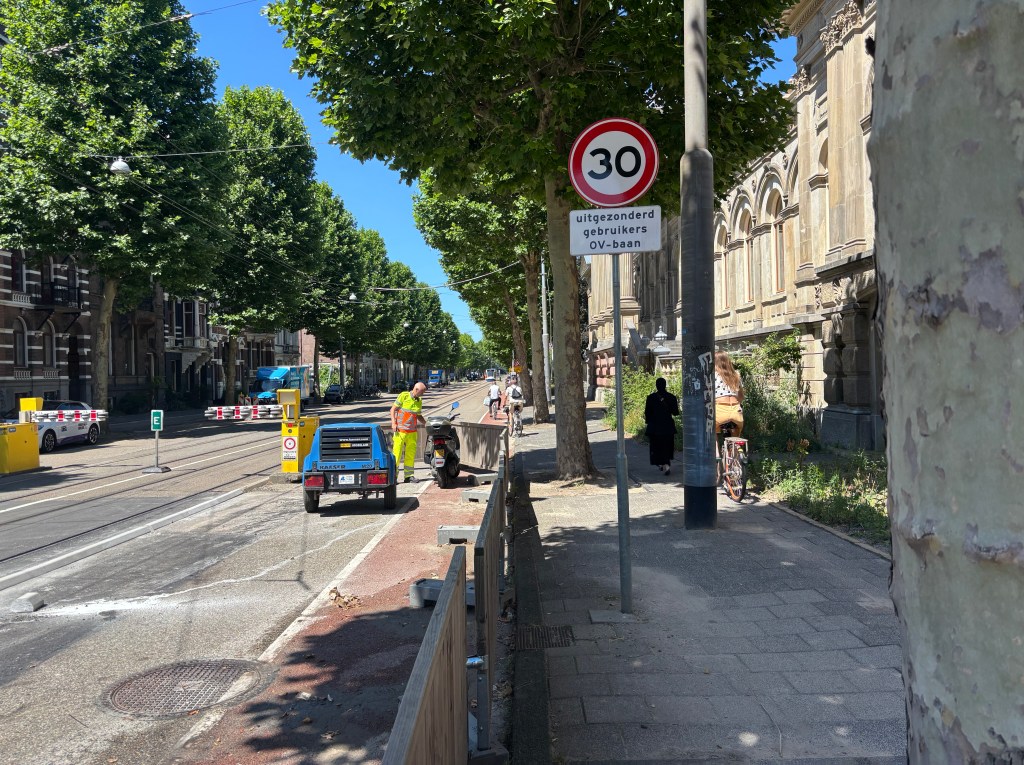
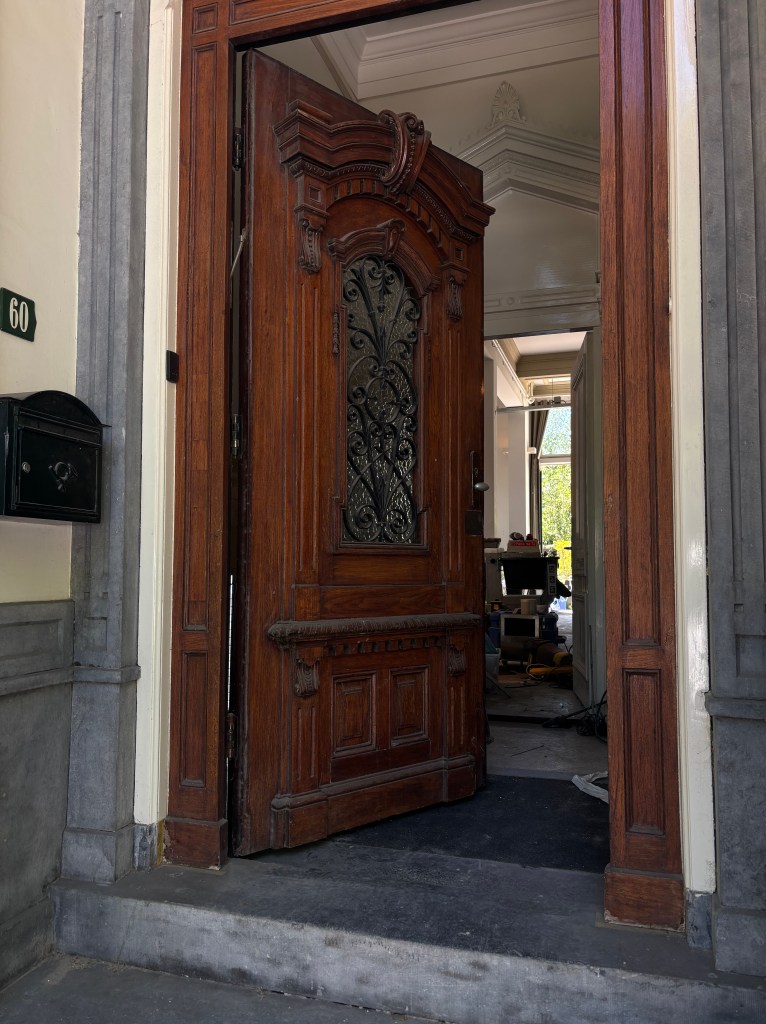
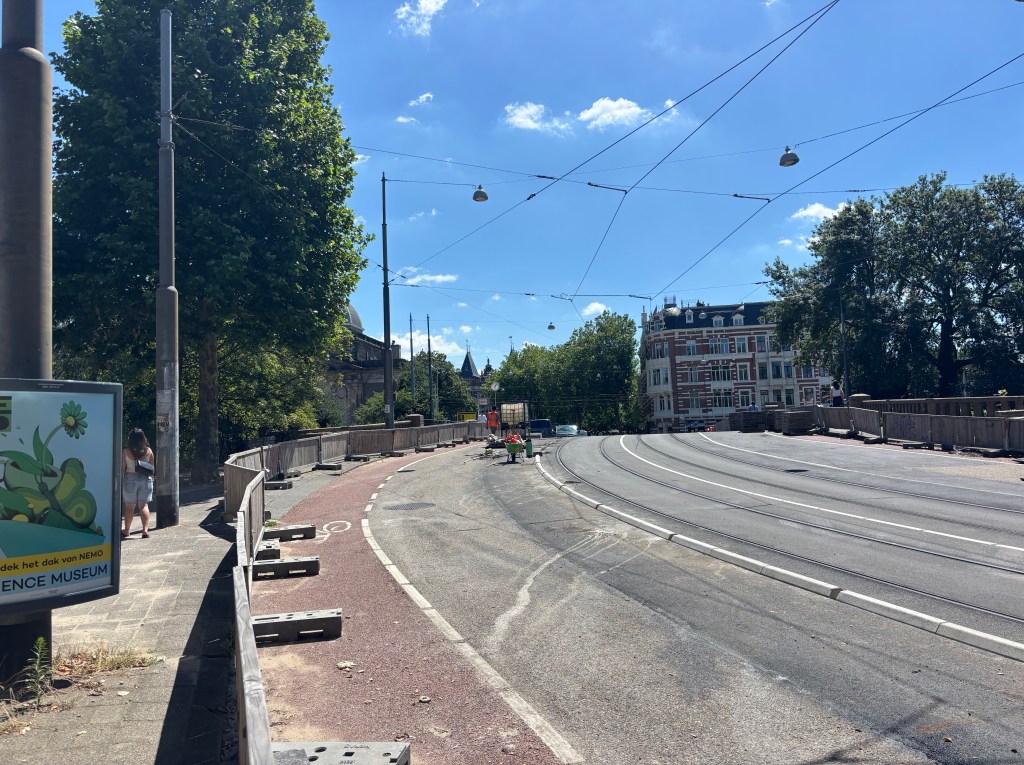
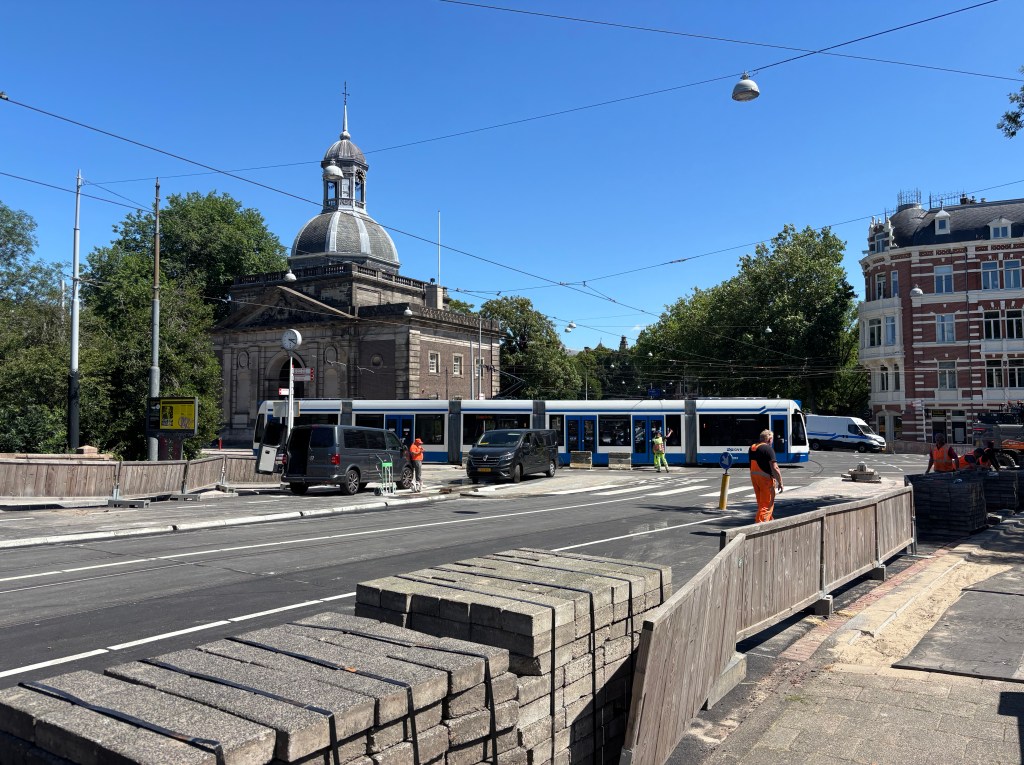
I will gladly take a detour or add some time to my commute to loop around construction of a safer bike lane or a new bus rapid transit stop. To the typical commuter, this may not be a compromise they’re open to. In my mind however, not only would safer multimodal infrastructure benefit users of non-car transit, it would encourage more people to get out of their cars and onto a bike or train, thus decreasing cars on the road and commute times. Yes, this would take decades in the US, but the benefits feel so clear while abroad.
Residents here are more culturally ingrained with pro-bike and pro-transit mentalities, so pushback to street redesigns has been less intense than it is at home. Unfortunately, in the US we have built our country’s identity on individuality rather than collectivity, but I believe small changes in my community— or yours!— can help spread a mindset that focuses on all of us, not just one of us at a time. And honestly, some inconvenience is good from time to time. Our lives are a constant stream of things to do, see, or say, and while it can be fun to be go-go-go, I have found that its just as nice to slow down and maybe have another 8 seconds added to our commutes 🙂
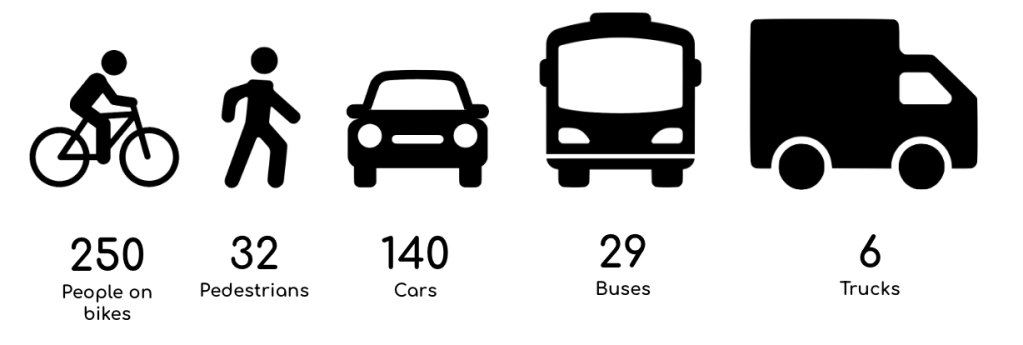
7. Intersection Studies and Diagrams
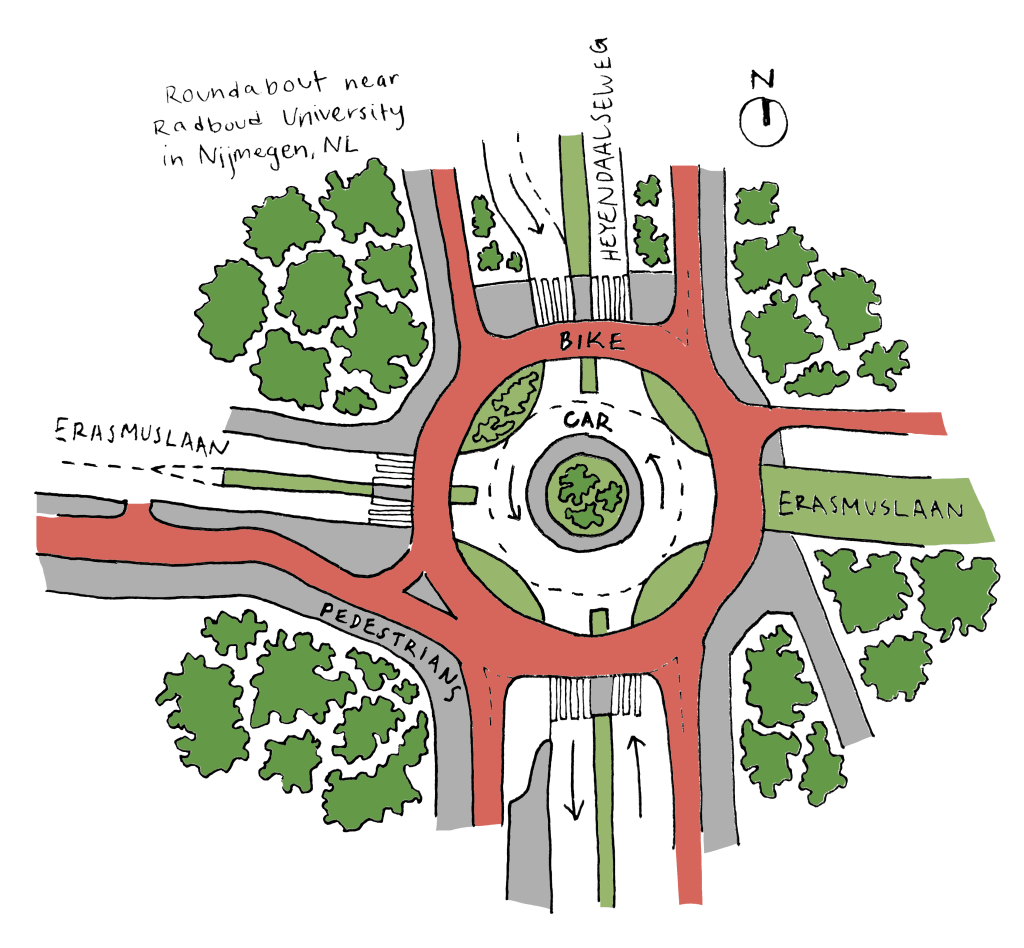
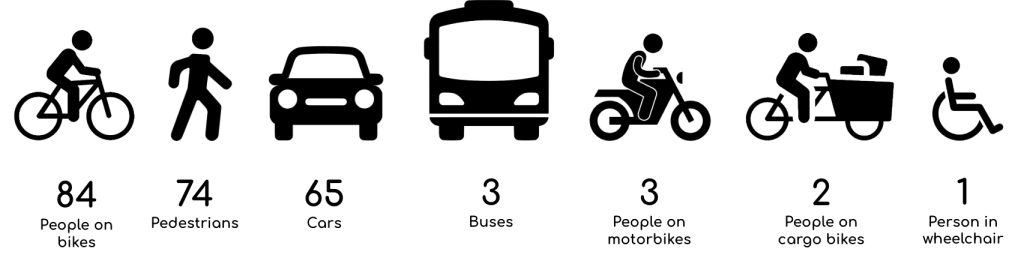
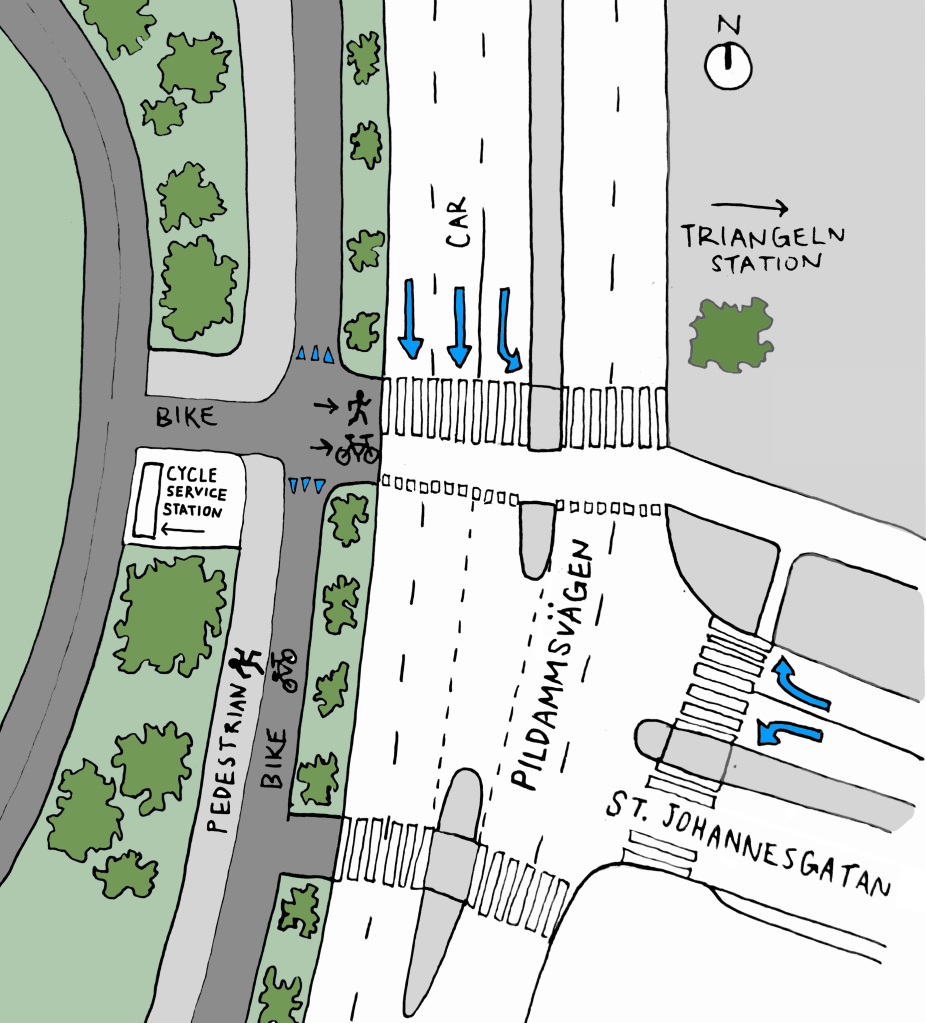
Intersection Study in Nijmegen, Netherlands
Modal split across 15 minutes
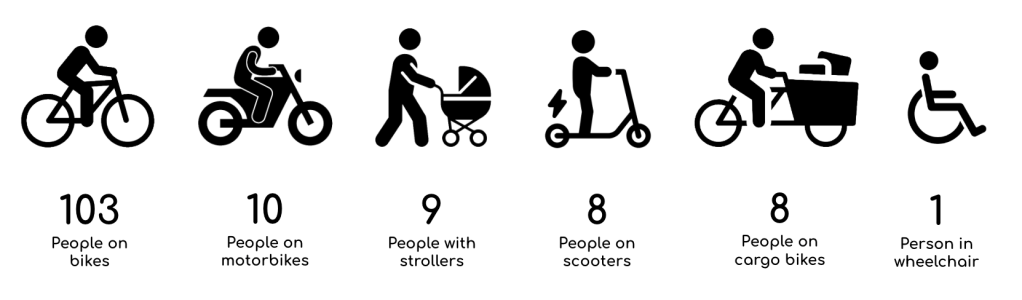
Intersection Study in Malmö, Sweden
Modal split across 15 minutes
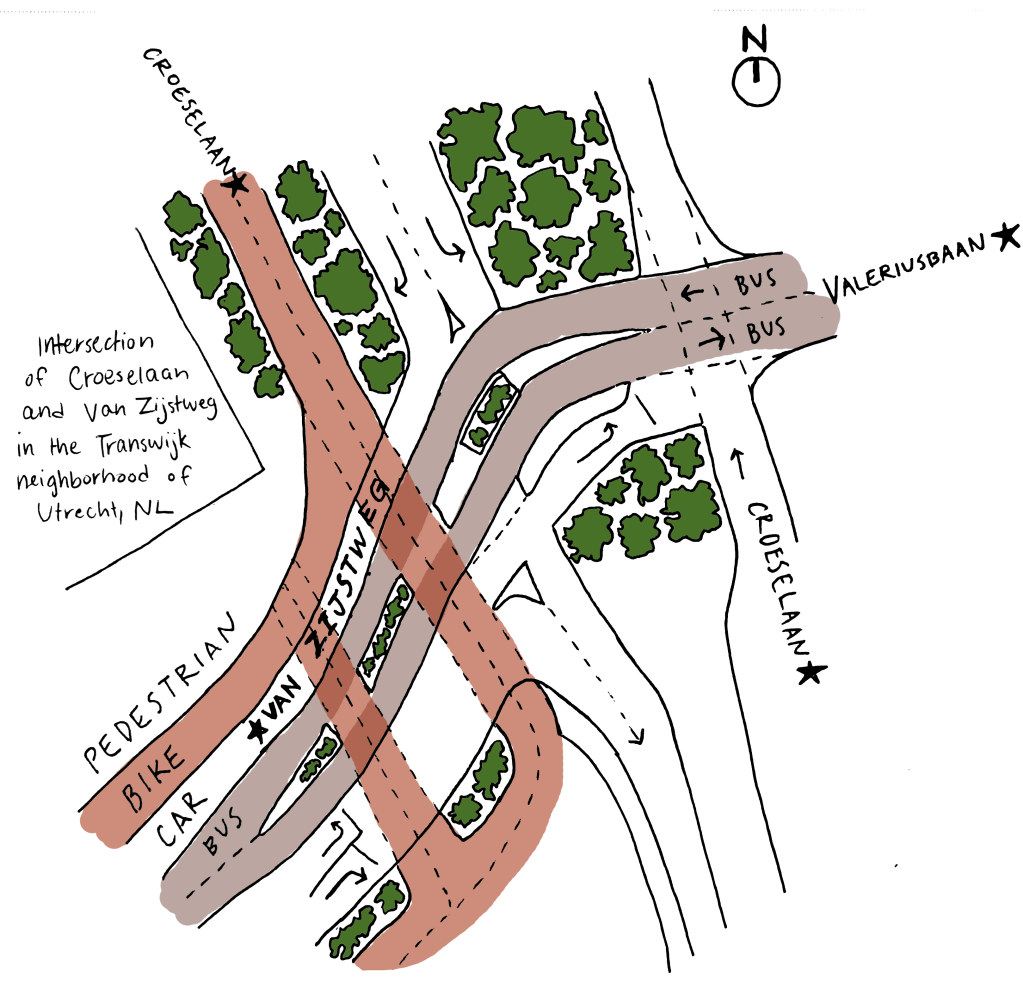
Intersection Study in Utrecht, Netherlands
Modal split across 15 minutes
8. Frans Halbuurt: Where the Old and New Come Together to Create the Ideal Neighborhood
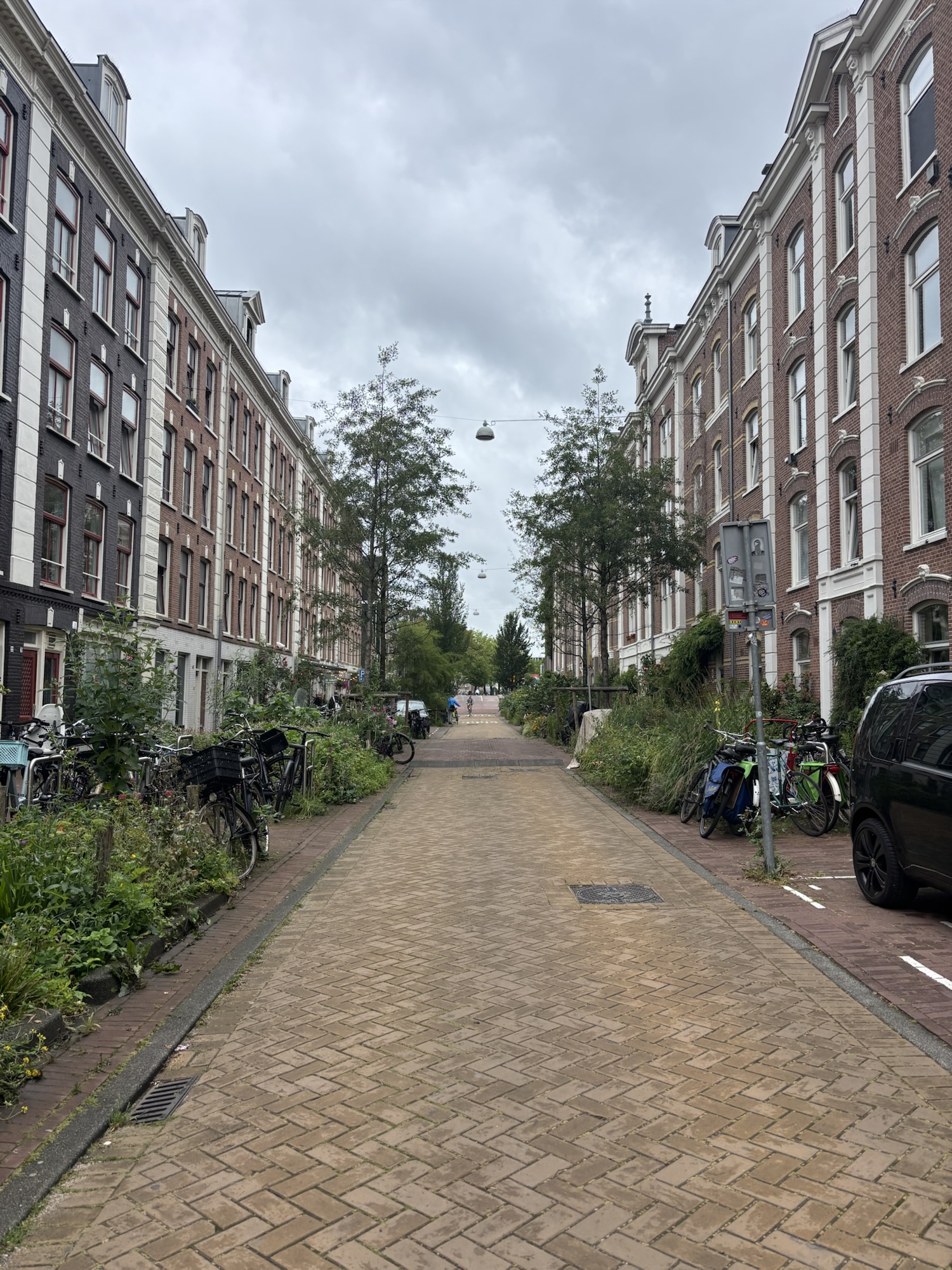
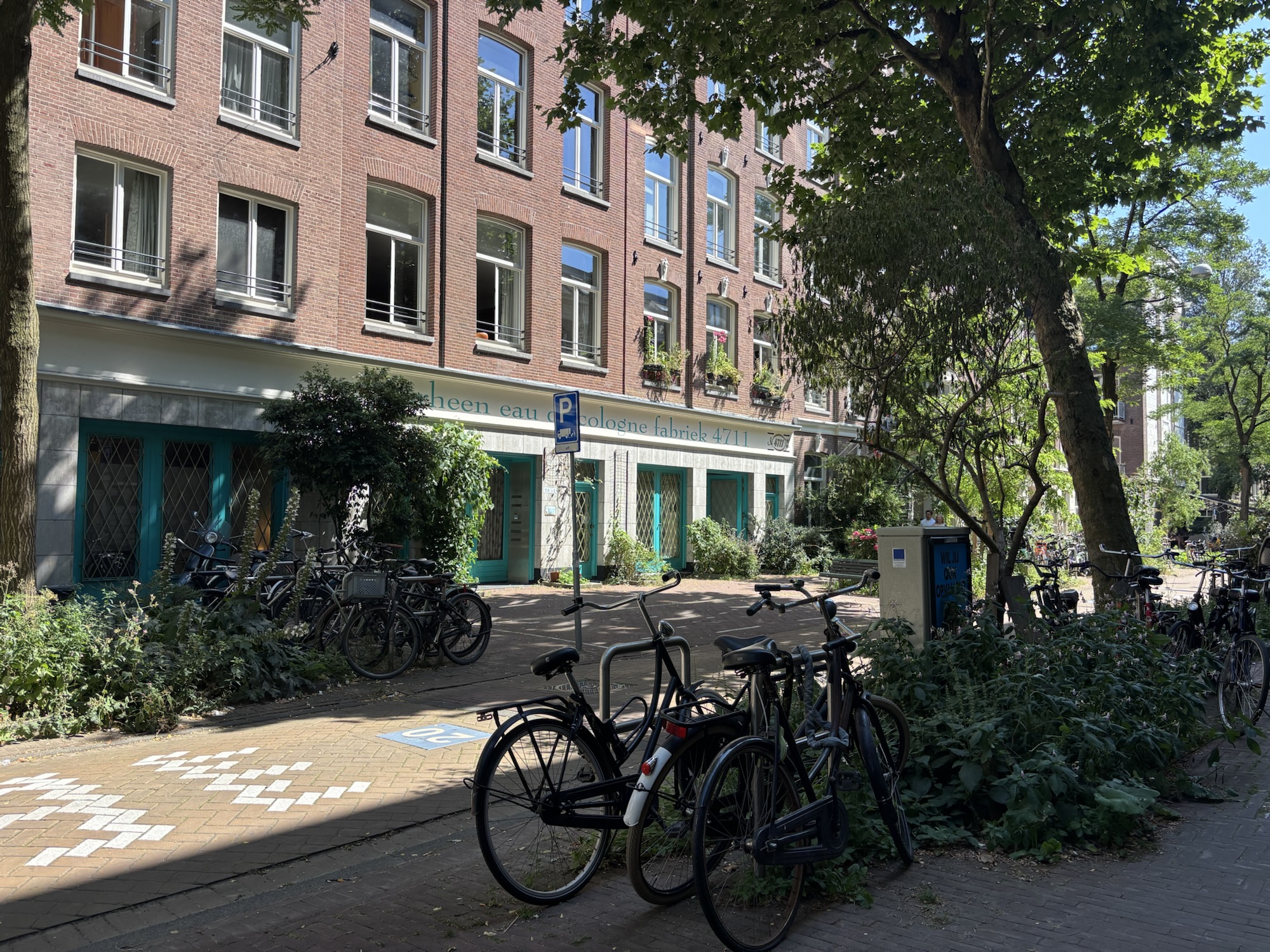
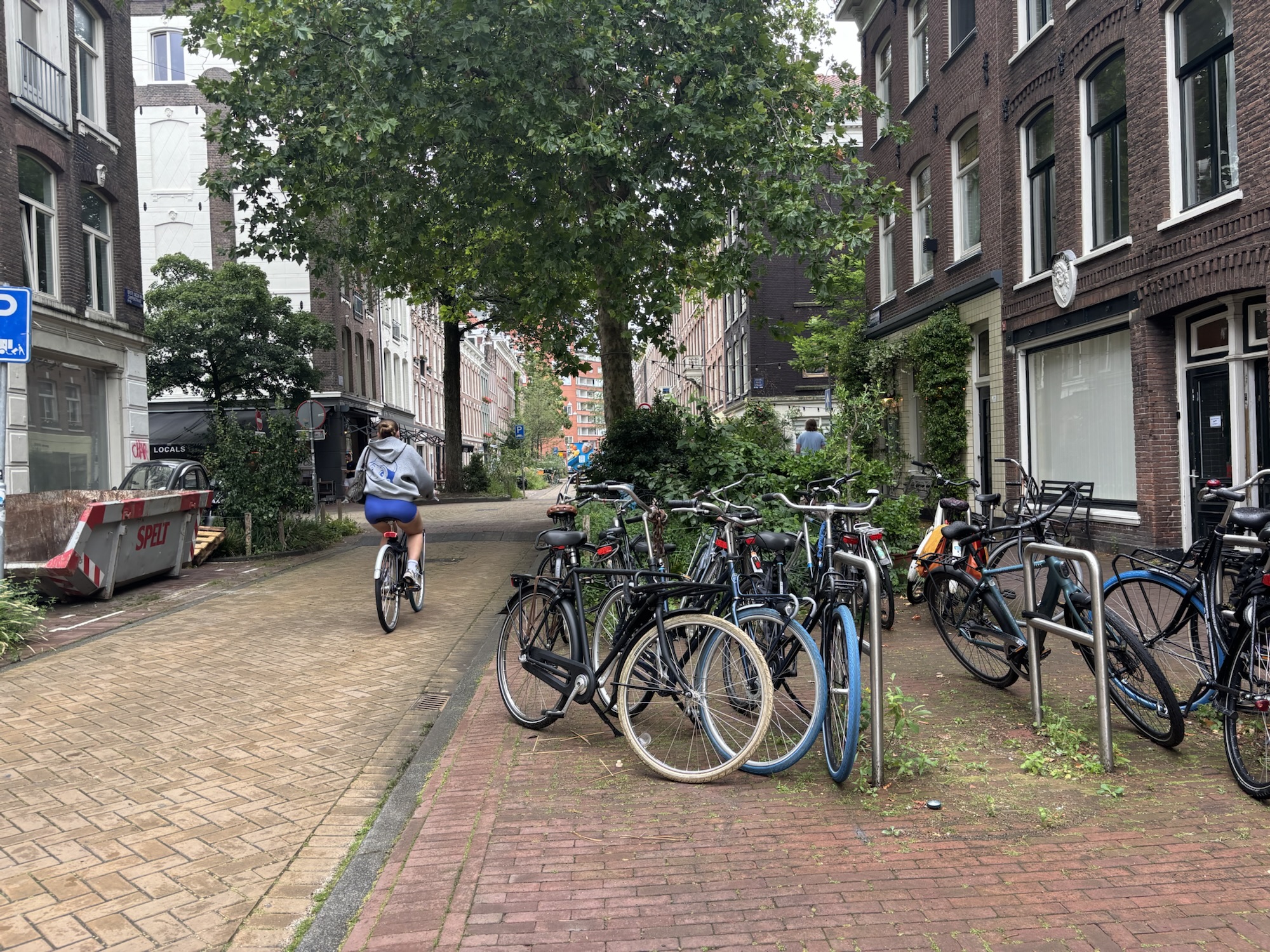
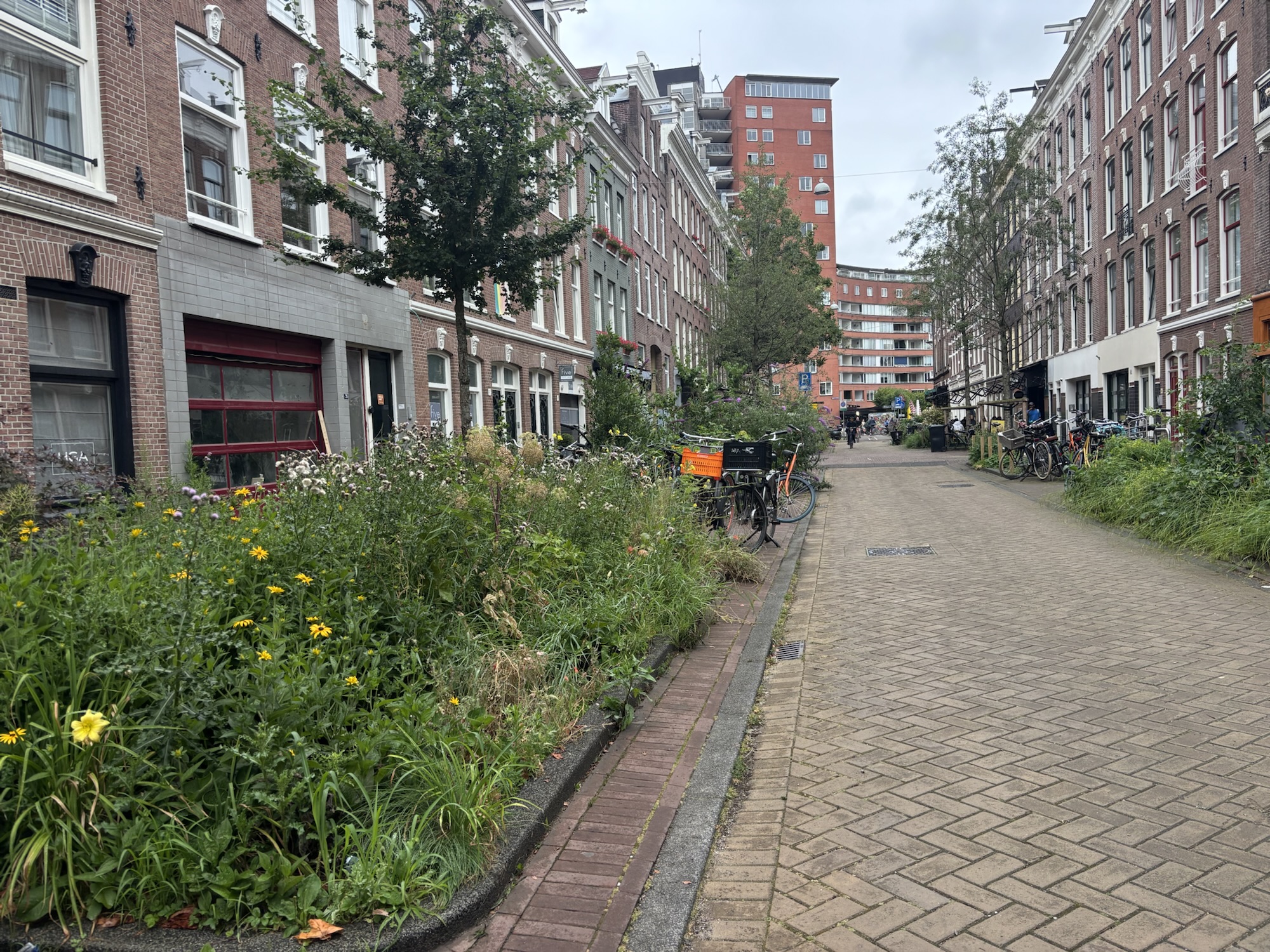
The Frans Halsbuurt sub-neighborhood of De Pijp in Amsterdam is a historic area named after Dutch Golden Age painter Frans Hals. I had the opportunity to explore the charming streets in Frans Halsbuurt during a field assignment with my friend and fellow program student Shane. The seamless blend of historic brick four to five story buildings with newer car-free infrastructure changes and added greenery makes this area feel calm and is my favorite neighborhood I have explored in the city.
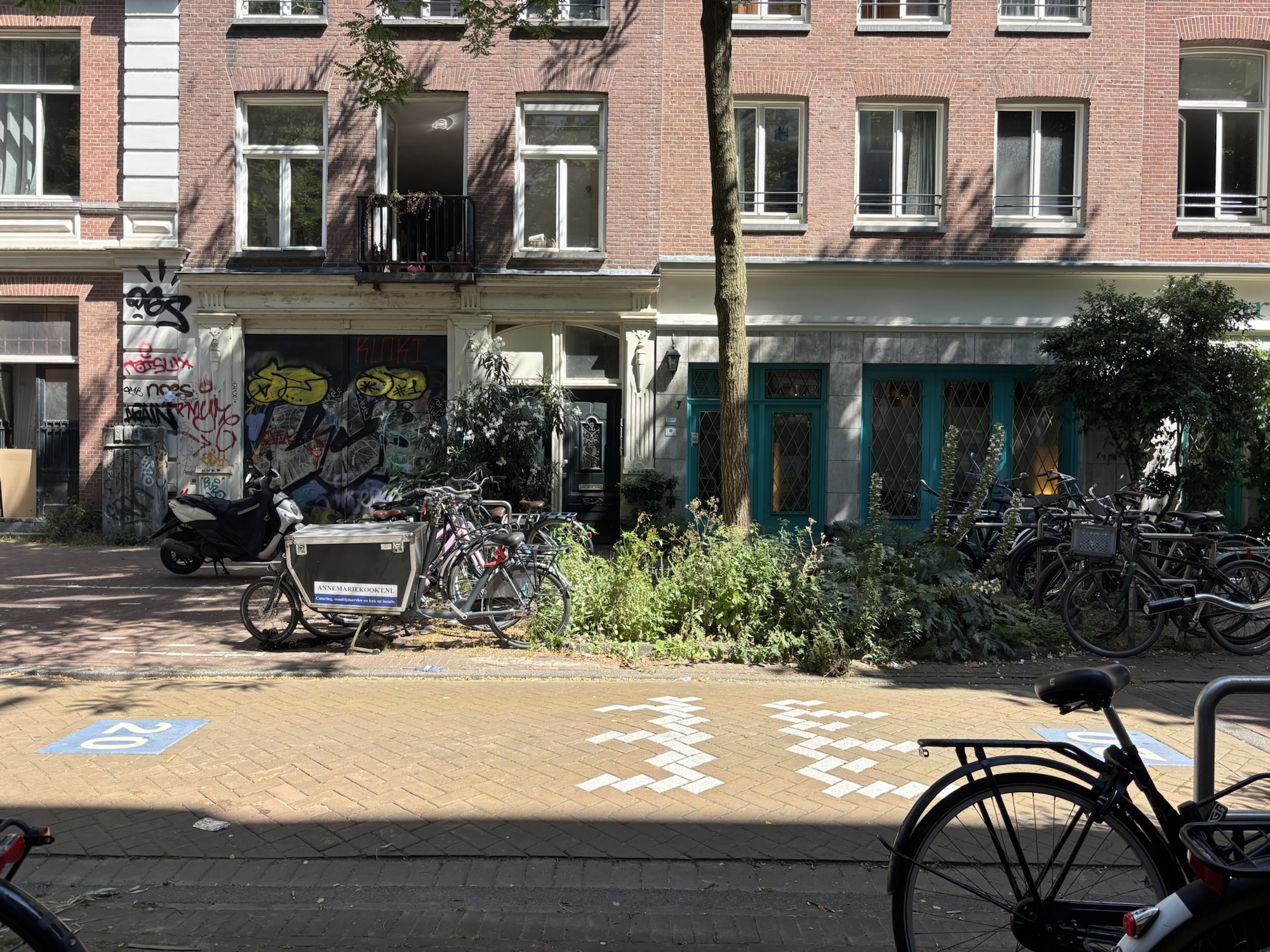
During a field assignment with colleague and friend Shane, we had the opportunity to explore what changes have happened in recent years to make the neighborhood feel the way it does. We recorded observations while walking through the neighborhood, compared older Street View images of the street, and talked with residents to form a list of 10 key changes that have transformed the space.
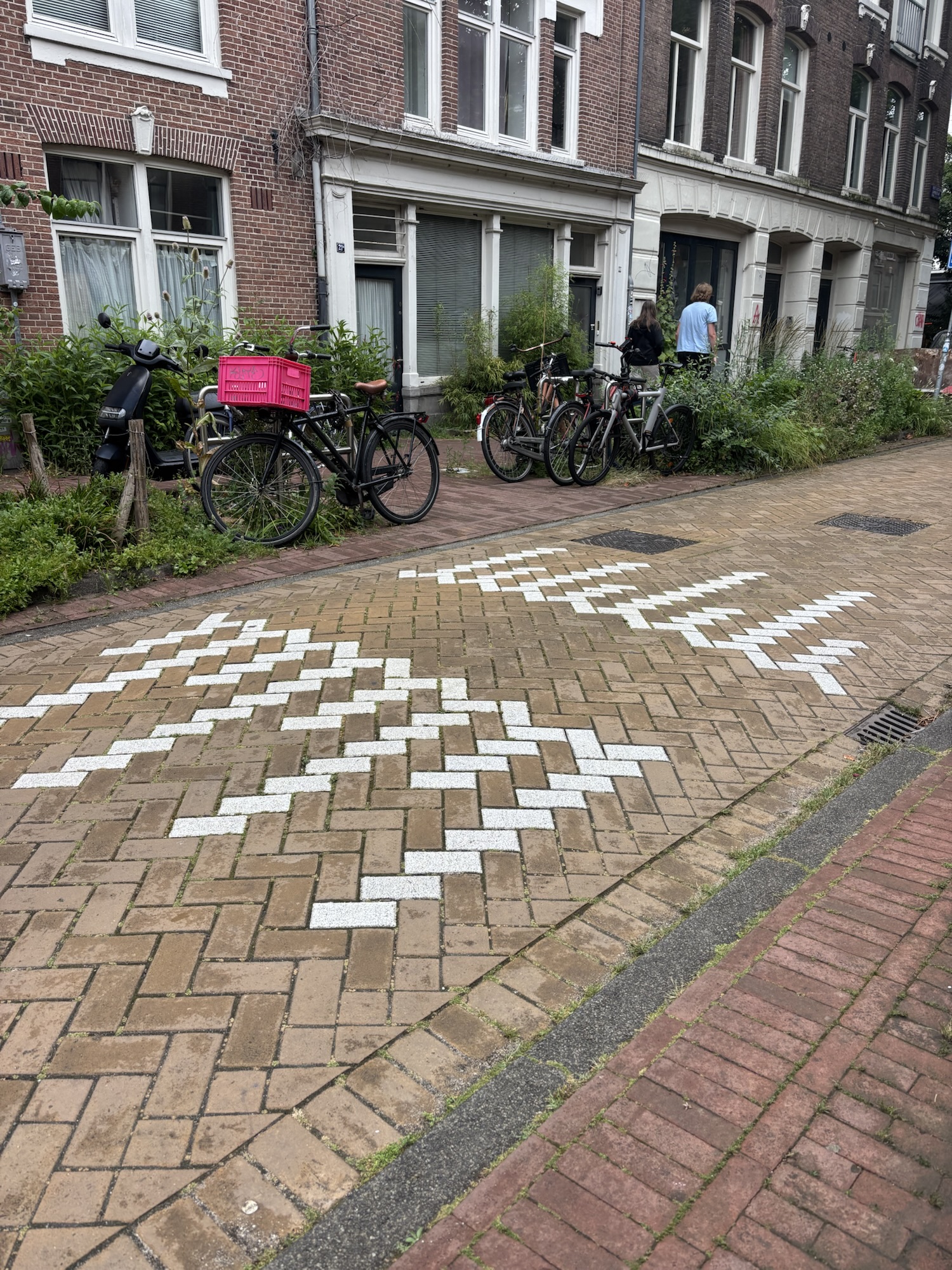
- The roads were redone with red bricks to slow traffic
- Contributes to goal of making cars guests on streets
- Very limited street parking
- 1-4 parking spaces per block
- Replaced by plantings and bike parking
- Disability parking spaces remain
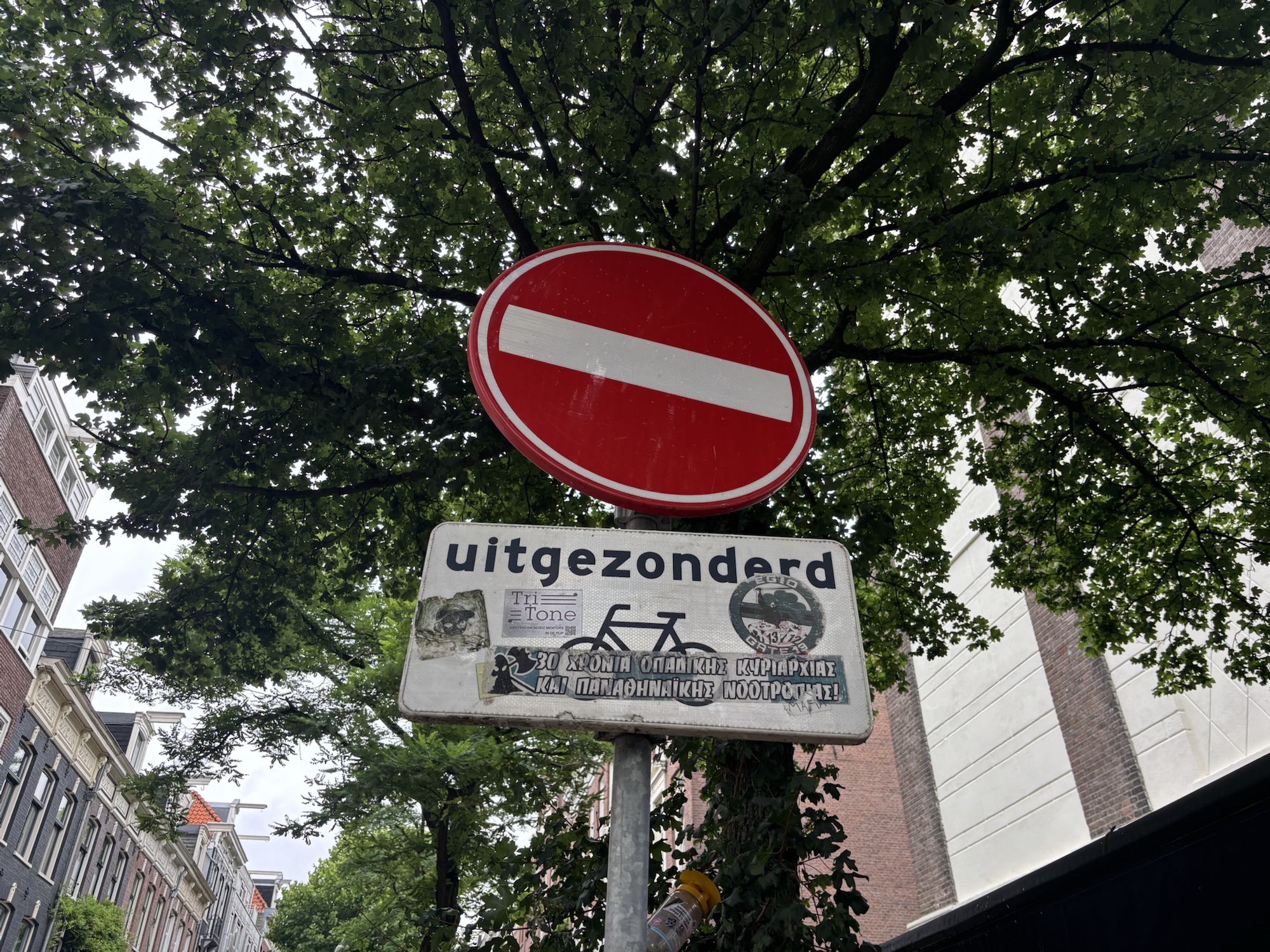
- Local traffic or deliveries only — no through traffic
- Achieved through street filtering
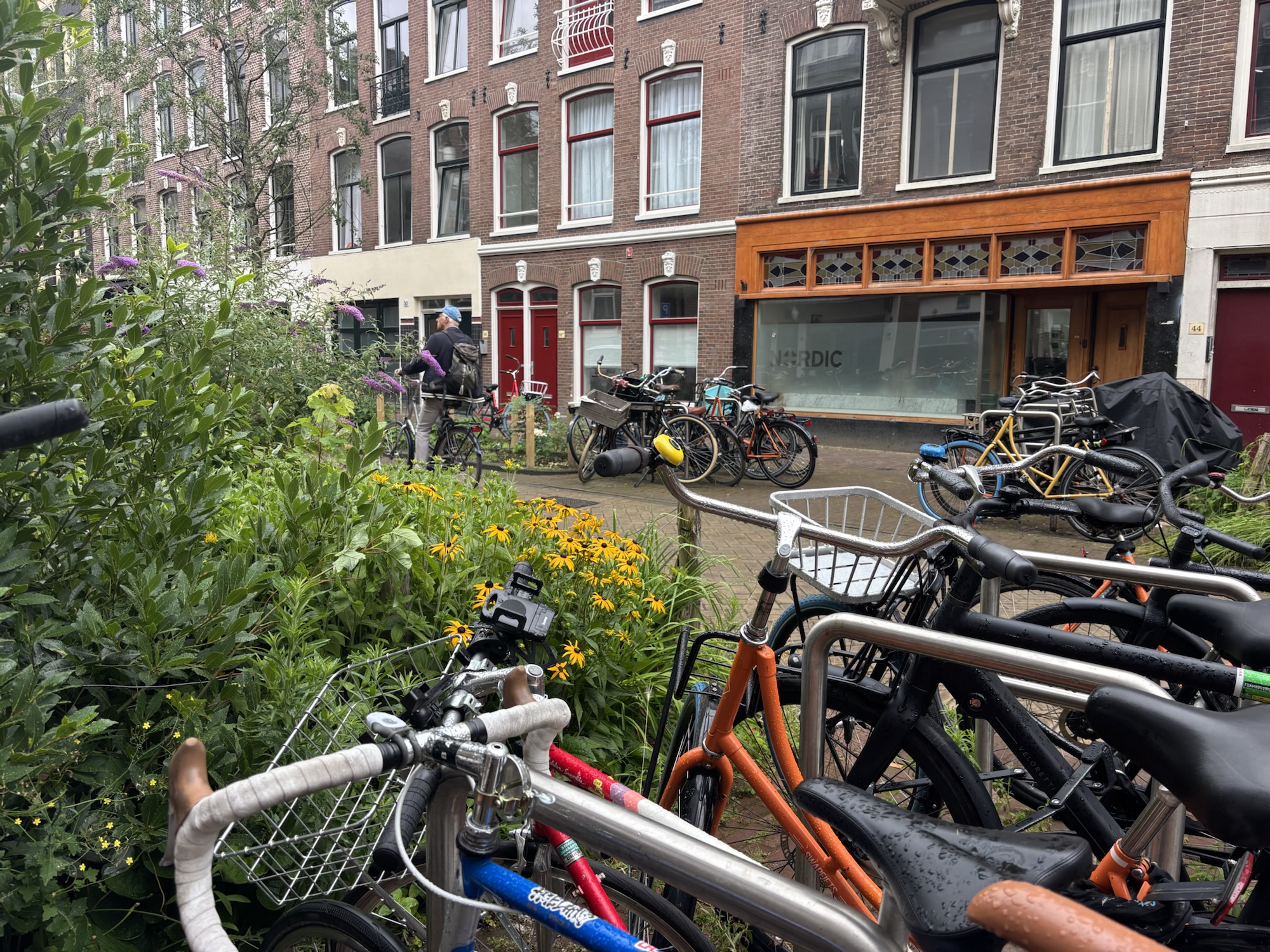
- Addition of plentiful bike parking
- The streets had bike parking previously, but more has been added in place of the car parking spaces
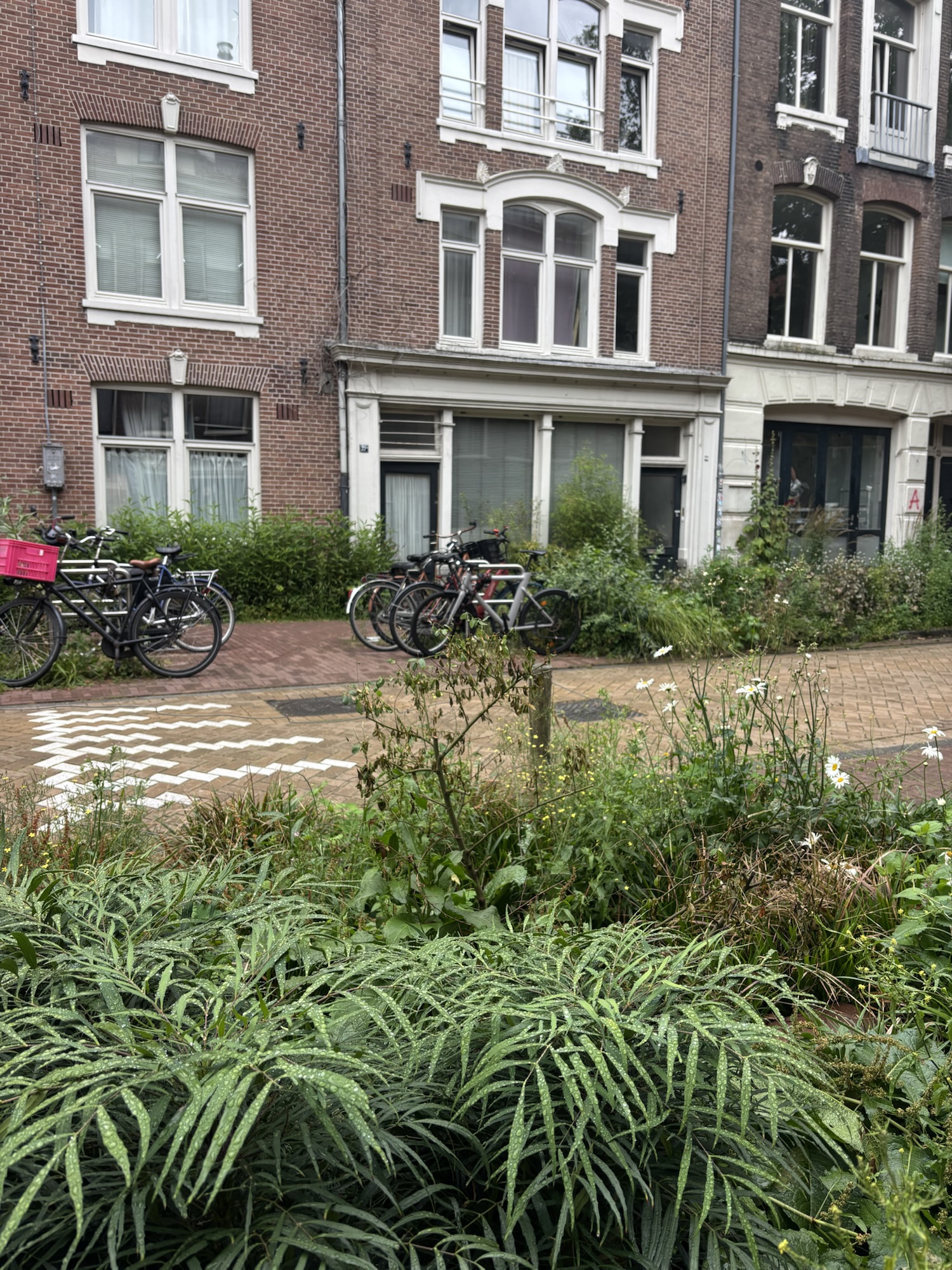
- 20 km/h speed limit built into road bricks
- Original speed limit was 30 km/h
- Creative and context-specific way to provide information and slow traffic
- Planters and plants added
- Bump outs, street planters, and established trees add shade and create visual intrigue
- Speed bumps
- Traffic slowing and part of street filtering
- Addition of benches on sidewalks and near roundabout intersections
- Provides resting spaces for all street users
- Design for 8 to 80: benches especially beneficial for older residents who need to pause and rest while walking
- Trash cans and public covered ashtrays
- Promotes proper waste disposal and clean streets
- More local businesses
- Essentially every corner in the neighborhood has a local cafe or restaurant, and the greater De Pijp area has plentiful shopping, food, and culture, along with being situated within 15 minutes walking from the museum district

9. Some Sweet Interactions
I’ve loved getting to observe and adjust to the social norms here in Denmark, Sweden, and the Netherlands. Sometimes it can be a little hard figuring out the similarities and differences in a new place, but I’ve kept a short list of sweet interactions I’ve had while abroad that are sticking with me.
While stopped at a red light in Copenhagen, I noticed the socks of the road biker next to me at the intersection. Wearing cycling bibs and sitting on a full-carbon bike, his socks were striped with red and white. I outstretched my leg to show him my socks, striped with navy and white (one of my favorite pairs). We looked at each other and giggled— striped socks! He explained that he usually wears mismatched socks every day, but these are his birthday socks, so he wears them paired up. As our light turned green, he waved goodbye and zipped ahead of me. I love talking to people in the bike lane at home, and it’s nice to have such an endearing and familiar conversation despite being so far from home.
When touring the Nordhavn development in Copenhagen with Klaus, an artist and resident of the neighborhood, we ran into his adult daughter and several friendly neighbors. While walking around Klaus, it was clear how connected he was to where he lived and how much he cared about his neighborhood. We were lucky enough to get an apartment tour from him— a window into a long life full of beautiful art, photographs, and furniture that felt perfect in the space. Our Klaus crossover also coincided with his 76th trip around the sun, and we sang him happy birthday at the end of our tour. He cried a few happy tears, we said goodbye, and we went on our way.
Our program is over now, but I am staying in Amsterdam for a few days until I go to Paris. Staying in a hostel with strangers is, as expected, quite a different experience compared to staying in one with just my friends on my abroad program. Though four of the girls in my room were up and packing their bags from 5:30 am till they left for the airport at 7:00 am, later in the morning I had the chance to talk to the other young woman in my room. Soon, I learned we’d both been abroad for the same amount of time, and that her next stop was Copenhagen! I got to give her some recommendations and we exchanged our contacts. It was a brief interaction before I headed out for the day, but her kindness and conversation brightened my day after a too-early wakeup.
Little moments like these feel so important right now, and have a bigger impact than they might back home. Long days in new places, though exciting, can over time make home feel farther and farther away, but short interactions with the people in these cities make home feel like it’s right here. Sweet moments like these have shown me to focus on the little things while I’m here, and it is something I will keep working to highlight throughout my days.
utrecht 7.07-7.14
10. Some Musings on Utrecht
People in Utrecht are very proud of their city, and being here just a few days has already shown me exactly why that is. At first glance, the city may seem like a smaller Amsterdam, but in reality, Amsterdam is actually a bigger, younger version of Utrecht, considering their age difference. Taking a closer look reveals Utrecht as a charming and tightly knit medieval city that is working in smart ways to modernize in a changing world.
During our group bike ride heading south of Utrecht, I had the opportunity to see the surrounding towns and regions that shape and are shaped by the major city. Multimodal connectivity to rural and suburban areas surrounding the city center promotes and prioritizes non-car commuting. Just about everywhere I looked along my ride, I could see a regional, national, or local train line rumbling along tracks in the distance— a sight I can’t say I have seen in the US. While in Culemborg, a small historic city 20 kilometers south of Utrecht, we crossed the river by ferry as there was no bridge— that is, no bridge for cars and cyclists. Just a few hundred meters further down the river, there was a train-only bridge connecting the two areas. The perks of train travel here truly speak for themselves.
Car ownership growth has outpaced that of population growth in the city in recent years. All of the recent cities we have visited expressed a planning emphasis on growing inwards as a city by redeveloping areas for higher density, rather than growing outwards through city expansion and sprawl. Incentivizing non-car transit is a key factor for this inward growth, especially in central neighborhoods. As per Utrecht’s Mobility Plan 2040, the city is incrementally decreasing on-street parking each year. The moves to make driving and car ownership less desirable in the city are not all on such a wide scale, but hold just as powerful of an impact. The Utrecht City Government Office, right above the central train station, where we met with life-long Utrecht resident and planner Ronald Tamse, has zero car parking for employees. But the building hosts 2,200 bicycle parking spaces, and the train station below has another 30,000 to offer. With secure bike storage amenities like these, on top of (literally) an interconnected and efficient train station, I can’t imagine any appeal for commuting to work by car to this major office building.
On top of this, the city aims to design for people from ages 8 to 80 so that all people can move throughout their city. Part of this is providing safe cycling routes on main roads but also on side streets, which feels calmer and safer as a cyclist. The impacts of this design goal can be seen across the Netherlands, in both cities and rural areas. On bike lanes going through the Utrecht city center and on trails 10km outside of city limits, I have seen people well into their 60s, 70s, and 80s still riding bikes for fun or for errands. It doesn’t sound too crazy, but back in the US, most people in the upper part of that age range are not capable of this level of activity. Our infrastructure and wellness systems do not make it a safe option, and this cements people into a sedentary lifestyle especially in old age.

